

7CENTER Aims to Empower SMEs Through a Secure and Sustainable Global Trade Ecosystem
NEW FARM, AUSTRALIA, February 10, 2026 /EINPresswire.com/ -- In the era of globalization, small and medium-sized enterprises (SMEs) account for the majority of businesses worldwide, yet they remain the most vulnerable participants in international trade. The challenge does not lie in products or ambition, but in SMEs’ ability to access the global trade system in a way that is both safe and sustainable.
For SMEs, the real difficulty is no longer finding opportunities, but operating effectively within a global trade environment that has become more complex and risk-laden than before. As supply chains fragment and transparency requirements increase, geopolitical risks become more pronounced. Consequently, the gap between large corporations and smaller businesses in international trade continues to widen.
The Challenges Facing SMEs in Global Trade
Over the past decade, digital platforms have significantly lowered the barriers for SMEs to enter international markets. B2B marketplaces and online networking channels have made it easier for businesses to identify potential partners and customers across borders.
However, access does not automatically translate into sustainable trade. Cross-border commerce requires a range of capabilities that many SMEs struggle to build independently: partner verification, transactional trust, secure payments, logistics coordination, regulatory compliance, and the ability to establish a credible brand presence in foreign markets.
While large corporations can invest in internal systems to manage these risks, SMEs are often forced to address each component in isolation—at higher cost and with greater uncertainty. This represents a structural gap in today’s global trade landscape.
How 7CENTER Addresses the Needs of SMEs
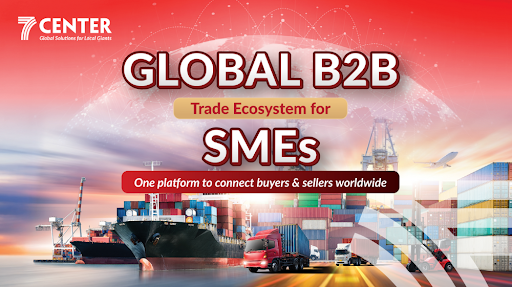
Against this backdrop, 7CENTER has chosen a different approach. Rather than positioning itself as a conventional B2B marketplace, the company defines itself as a global trade ecosystem designed specifically for SMEs.
Founded in Australia—a market known for its high standards of transparency, compliance, and international trade governance—7CENTER has developed its model with a long-term infrastructure mindset. Today, the platform has established offices in Australia, Dubai, Thailand, and Vietnam, reflecting a strategic focus on key trade and logistics hubs across Asia, the Middle East, and Oceania.
This approach is rooted in a core belief: SMEs do not fail in international markets because they lack products or ambition, but because they lack a sufficiently reliable system to operate sustainably over time.
7CENTER is designed as an integrated structure in which the critical elements of cross-border trade do not exist in silos, but are connected within a single ecosystem—ranging from trade facilitation and business verification to payments, logistics, and brand development.
What Sets 7CENTER Apart
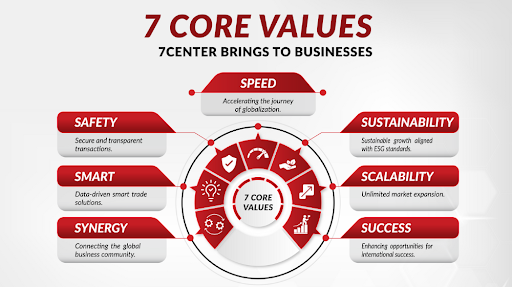
A defining feature of 7CENTER is its emphasis on trust and transparency as foundational principles. Through structured business profiles and partner verification mechanisms, the platform aims to reduce risk from the outset—an element that is often decisive in international B2B transactions.
Beyond connectivity, 7CENTER’s ecosystem is closely tied to execution. By integrating components such as payments, logistics, and market support, the platform enables businesses not only to find partners, but also to complete transactions in a complex cross-border environment.
Another notable distinction lies in 7CENTER’s long-term perspective. Rather than prioritizing transaction volume, the platform focuses on helping SMEs build sustainable business identities and brand capabilities—intangible assets that accumulate over time and create lasting competitive advantages.
This combination of transparency, operational support, and long-term vision differentiates 7CENTER from traditional marketplace models, which typically emphasize speed and scale of transactions.
Building “Soft Infrastructure” for Global Trade
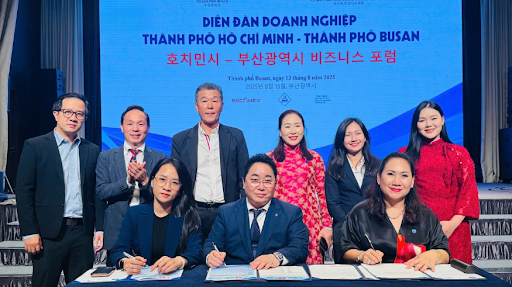
Beyond its digital platform, 7CENTER is expanding its ecosystem through offline engagement, including business forums, trade fairs, and international trade promotion events. These touchpoints allow SMEs to connect directly with partners, investors, and new markets across the global value chain.
By combining digital infrastructure with physical presence in strategic markets, 7CENTER is effectively building what could be described as “soft infrastructure” for global trade—less visible than ports or shipping routes, but equally essential in establishing trust, credibility, and long-term collaboration.
A Long-Term View on SME Globalization
As Asia continues to generate a growing number of globally competitive SMEs, the question is no longer whether these businesses can go international, but how they will participate in global value chains.
In a world where scale is no longer the sole advantage, ecosystems that reduce risk, enhance transparency, and support execution will become increasingly critical. 7CENTER’s model offers an alternative path—one that enables SMEs to compete on the global stage without having to build every component from scratch.
Website: www.7center.com
Ivanka Do
7CENTER
email us here
Legal Disclaimer:
EIN Presswire provides this news content "as is" without warranty of any kind. We do not accept any responsibility or liability for the accuracy, content, images, videos, licenses, completeness, legality, or reliability of the information contained in this article. If you have any complaints or copyright issues related to this article, kindly contact the author above.
