

Global take on agriculture news
Provided by AGP
Solar Panel Manufacturing Plant Setup, Feasibility Study, ROI Analysis and Business Plan Consultant
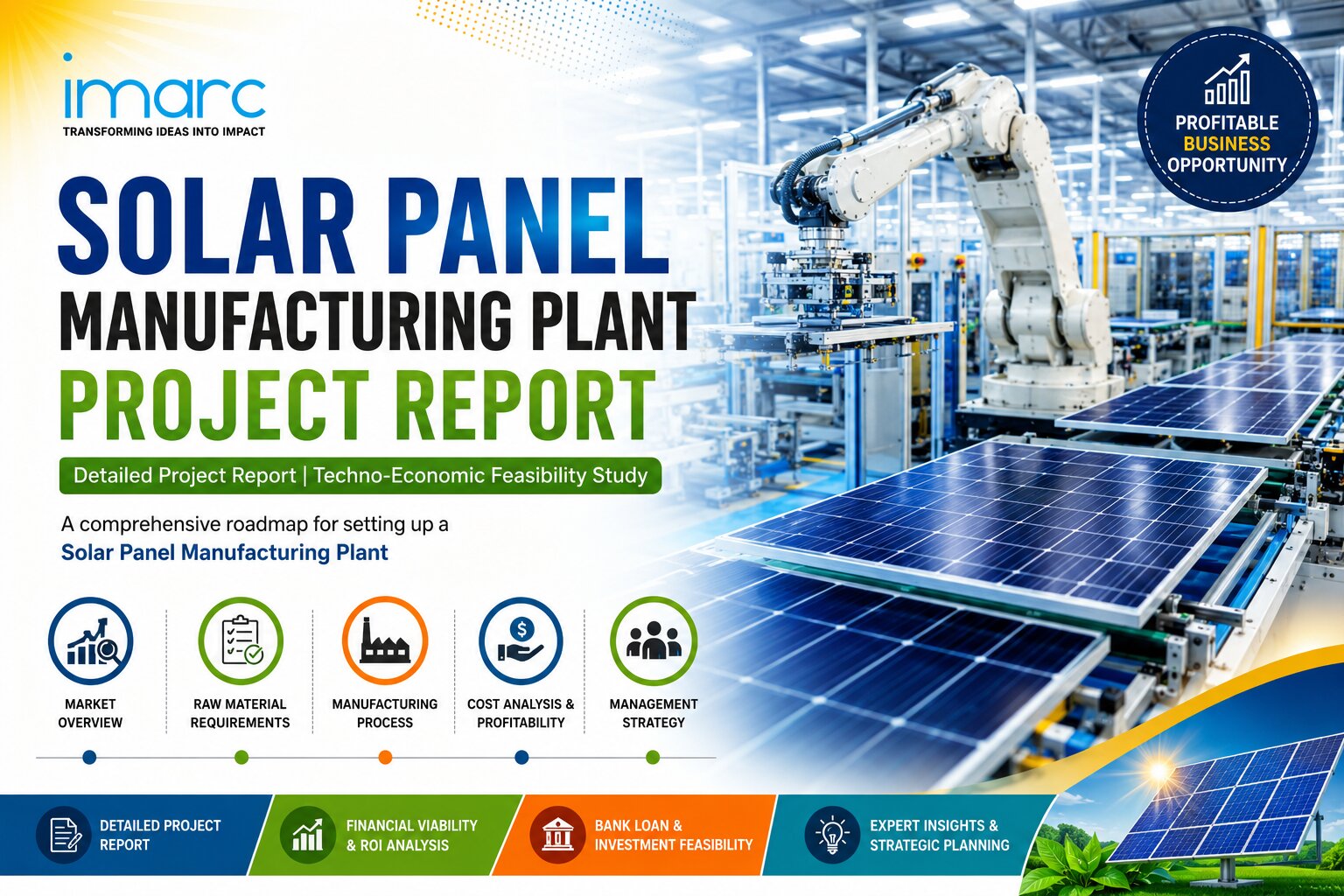
A Detailed DPR Covering CapEx, OpEx, Process Design, ROI Analysis, and the Global Opportunity in Photovoltaic Module Manufacturing, and the Energy Transition
BROOKLYN, NY, UNITED STATES, May 19, 2026 /EINPresswire.com/ -- Setting up a solar panel manufacturing plant setup is one of the most compelling manufacturing investments of this decade. Governments across the world have committed to net-zero carbon targets, and solar energy is the fastest-growing source of new power generation globally. Every gigawatt of solar capacity installed requires solar modules - and every market building that capacity is actively looking to reduce dependence on Chinese supply. For a manufacturer entering this space today, the combination of structural demand growth, government incentives, and a China-plus-one sourcing shift from global buyers creates an entry window that did not exist a decade ago.IMARC Group's Solar Panel Manufacturing Plant Project Report is a complete DPR and solar panel manufacturing feasibility study for investors, entrepreneurs, and project developers entering this space. It covers the full photovoltaic manufacturing plant setup - from cell processing and module assembly through lamination, framing, and testing - with complete solar panel plant CapEx and OpEx modelling and 10-year financial projections.
𝐑𝐞𝐪𝐮𝐞𝐬𝐭 𝐟𝐨𝐫 𝐚 𝐒𝐚𝐦𝐩𝐥𝐞 𝐑𝐞𝐩𝐨𝐫𝐭: https://www.imarcgroup.com/solar-panel-manufacturing-plant-project-report/requestsample
𝐈𝐧𝐯𝐞𝐬𝐭𝐦𝐞𝐧𝐭 𝐃𝐫𝐢𝐯𝐞𝐫𝐬 𝐚𝐧𝐝 𝐌𝐚𝐫𝐤𝐞𝐭 𝐎𝐩𝐩𝐨𝐫𝐭𝐮𝐧𝐢𝐭𝐲
Three forces are converging to make this the right entry point for solar panel manufacturing:
𝐍𝐞𝐭-𝐳𝐞𝐫𝐨 𝐜𝐨𝐦𝐦𝐢𝐭𝐦𝐞𝐧𝐭𝐬 𝐜𝐫𝐞𝐚𝐭𝐢𝐧𝐠 𝐧𝐨𝐧-𝐧𝐞𝐠𝐨𝐭𝐢𝐚𝐛𝐥𝐞 𝐝𝐞𝐦𝐚𝐧𝐝: For anyone evaluating a solar panel plant investment, Over 140 countries have set net-zero or carbon neutrality targets, and solar is the primary technology delivering on those commitments. The International Energy Agency has repeatedly confirmed solar as the cheapest source of new electricity in most of the world. Every utility, every corporate energy buyer, every government-backed infrastructure project is adding solar - creating a demand floor that continues to rise regardless of economic cycles.
𝐂𝐡𝐢𝐧𝐚-𝐩𝐥𝐮𝐬-𝐨𝐧𝐞 𝐬𝐡𝐢𝐟𝐭 𝐨𝐩𝐞𝐧𝐢𝐧𝐠 𝐠𝐥𝐨𝐛𝐚𝐥 𝐬𝐮𝐩𝐩𝐥𝐲 𝐜𝐡𝐚𝐢𝐧𝐬: China controls approximately 80% of global solar module production. The US Inflation Reduction Act, the EU Solar Charter, and Japan's green transformation programme are all explicitly designed to build non-Chinese solar manufacturing capacity. US tariffs on Chinese solar exports, the EU Carbon Border Adjustment Mechanism, and ALMM-style local content requirements are creating structured, policy-backed demand for certified non-Chinese PV module manufacturing plant output. India, Vietnam, Malaysia, and the US are the primary beneficiaries.
𝐈𝐧𝐝𝐢𝐚'𝐬 𝐏𝐋𝐈 𝐬𝐜𝐡𝐞𝐦𝐞 𝐜𝐫𝐞𝐚𝐭𝐢𝐧𝐠 𝐭𝐡𝐞 𝐦𝐨𝐬𝐭 𝐚𝐠𝐠𝐫𝐞𝐬𝐬𝐢𝐯𝐞 𝐬𝐨𝐥𝐚𝐫 𝐦𝐚𝐧𝐮𝐟𝐚𝐜𝐭𝐮𝐫𝐢𝐧𝐠 𝐢𝐧𝐜𝐞𝐧𝐭𝐢𝐯𝐞 𝐠𝐥𝐨𝐛𝐚𝐥𝐥𝐲: India's Production Linked Incentive (PLI) scheme for High Efficiency Solar PV Modules has a total outlay of ₹24,000 crore and has already attracted ₹48,120 crore in investments, creating 38,500 direct jobs as of June 2025. Solar module capacity in India nearly doubled from 38 GW in March 2024 to 74 GW in March 2025. Cell manufacturing capacity tripled in the same period to 25 GW. India exported 15 GW of solar modules in the first nine months of 2025–10.4 GW to the US alone - confirming its emergence as a credible global supply alternative.
𝐒𝐨𝐥𝐚𝐫 𝐏𝐚𝐧𝐞𝐥 𝐓𝐲𝐩𝐞𝐬 𝐚𝐧𝐝 𝐏𝐫𝐨𝐝𝐮𝐜𝐭 𝐑𝐚𝐧𝐠𝐞
A solar panel manufacturing plant's product mix determines its technology positioning, end markets, and margin profile. A solar module manufacturing plant can serve residential, commercial, or utility-scale buyers depending on the wattage range and technology choice. Main panel categories:
• 𝐌𝐨𝐧𝐨𝐜𝐫𝐲𝐬𝐭𝐚𝐥𝐥𝐢𝐧𝐞 𝐏𝐄𝐑𝐂 (𝐏𝐚𝐬𝐬𝐢𝐯𝐚𝐭𝐞𝐝 𝐄𝐦𝐢𝐭𝐭𝐞𝐫 𝐚𝐧𝐝 𝐑𝐞𝐚𝐫 𝐂𝐞𝐥𝐥): The current mainstream product globally. Monocrystalline solar panel manufacturing at 20–22% conversion efficiency. Used in rooftop residential, commercial, and utility-scale solar farms. PERC technology adds a rear passivation layer improving electron capture. Most large Indian manufacturers - Waaree, Adani Solar, Vikram Solar - produce PERC as their primary volume product.
• 𝐓𝐎𝐏𝐂𝐨𝐧 (𝐓𝐮𝐧𝐧𝐞𝐥 𝐎𝐱𝐢𝐝𝐞 𝐏𝐚𝐬𝐬𝐢𝐯𝐚𝐭𝐞𝐝 𝐂𝐨𝐧𝐭𝐚𝐜𝐭): Next-generation technology achieving 23–24% efficiency. TOPCon modules are becoming the new standard for premium utility and commercial installations. HVR Solar, Tata Power, and several PLI awardees are commissioning TOPCon lines. A solar cell manufacturing plant entering today should plan for TOPCon capability.
• 𝐁𝐢𝐟𝐚𝐜𝐢𝐚𝐥 𝐩𝐚𝐧𝐞𝐥𝐬: Generate electricity from both front and rear surfaces, increasing energy yield by 10–25% depending on installation type. Standard specification for most new utility-scale solar parks globally. Bifacial module production adds minimal cost but commands higher selling prices per watt.
• 𝐇𝐉𝐓 (𝐇𝐞𝐭𝐞𝐫𝐨𝐣𝐮𝐧𝐜𝐭𝐢𝐨𝐧 𝐓𝐞𝐜𝐡𝐧𝐨𝐥𝐨𝐠𝐲): Premium technology achieving 24–25%+ efficiency by combining crystalline silicon with amorphous silicon layers. Lower degradation over time and better performance in high-temperature conditions. Capital-intensive to manufacture but commands the highest per-watt pricing in the market.
• 𝐅𝐥𝐞𝐱𝐢𝐛𝐥𝐞 𝐚𝐧𝐝 𝐁𝐈𝐏𝐕 𝐩𝐚𝐧𝐞𝐥𝐬: Thin, lightweight panels for building-integrated and specialised applications. Niche segment with premium pricing. Used in architectural glazing, vehicle-integrated solar, and curved surface installations.
𝐒𝐨𝐥𝐚𝐫 𝐏𝐚𝐧𝐞𝐥 𝐌𝐚𝐧𝐮𝐟𝐚𝐜𝐭𝐮𝐫𝐢𝐧𝐠 𝐏𝐥𝐚𝐧𝐭 𝐅𝐞𝐚𝐬𝐢𝐛𝐢𝐥𝐢𝐭𝐲 𝐑𝐞𝐩𝐨𝐫𝐭 → https://www.imarcgroup.com/solar-panel-manufacturing-plant-project-report
𝐇𝐨𝐰 𝐚 𝐒𝐨𝐥𝐚𝐫 𝐏𝐚𝐧𝐞𝐥 𝐌𝐚𝐧𝐮𝐟𝐚𝐜𝐭𝐮𝐫𝐢𝐧𝐠 𝐏𝐥𝐚𝐧𝐭 𝐖𝐨𝐫𝐤𝐬 - 𝐓𝐡𝐞 𝐏𝐫𝐨𝐝𝐮𝐜𝐭𝐢𝐨𝐧 𝐏𝐫𝐨𝐜𝐞𝐬𝐬
A PV module manufacturing plant operates across two main stages: cell manufacturing and module assembly. Many facilities start with module assembly (buying cells from external suppliers) before integrating backward into cell production:
• 𝐒𝐢𝐥𝐢𝐜𝐨𝐧 𝐩𝐮𝐫𝐢𝐟𝐢𝐜𝐚𝐭𝐢𝐨𝐧 𝐚𝐧𝐝 𝐢𝐧𝐠𝐨𝐭 𝐠𝐫𝐨𝐰𝐭𝐡: Polysilicon is purified and melted, then grown into cylindrical monocrystalline ingots using the Czochralski process (or cast as polycrystalline blocks). This is the most capital-intensive upstream stage and where most Indian manufacturers currently rely on imports
• 𝐖𝐚𝐟𝐞𝐫 𝐬𝐥𝐢𝐜𝐢𝐧𝐠: Ingots are sliced into thin wafers (150–180 microns) using diamond wire saws. Wafer quality - thickness uniformity, surface finish, and minority carrier lifetime - directly determines cell efficiency potential
• 𝐂𝐞𝐥𝐥 𝐩𝐫𝐨𝐜𝐞𝐬𝐬𝐢𝐧𝐠: Wafers are cleaned, textured, doped, and coated in a sequence of steps including diffusion, PECVD anti-reflection coating, and screen-printed metal contacts. This is where the photovoltaic effect is created. PERC adds a rear passivation step; TOPCon adds a tunnel oxide and polysilicon layer
• 𝐂𝐞𝐥𝐥 𝐭𝐞𝐬𝐭𝐢𝐧𝐠 𝐚𝐧𝐝 𝐬𝐨𝐫𝐭𝐢𝐧𝐠: Completed cells are measured for efficiency and sorted into bins. Binning ensures matched cells in each module, which is critical for power output consistency
• 𝐌𝐨𝐝𝐮𝐥𝐞 𝐬𝐭𝐫𝐢𝐧𝐠𝐢𝐧𝐠: Cells are interconnected in series strings using copper ribbons soldered or laser-welded between cells. String layout determines module voltage and current
• 𝐋𝐚𝐦𝐢𝐧𝐚𝐭𝐢𝐨𝐧: Cell strings are sandwiched between front glass, EVA encapsulant, back sheet (or rear glass for bifacial), and laminated under heat and vacuum to bond all layers permanently. This is the core module assembly step
• 𝐅𝐫𝐚𝐦𝐢𝐧𝐠 𝐚𝐧𝐝 𝐣𝐮𝐧𝐜𝐭𝐢𝐨𝐧 𝐛𝐨𝐱 𝐚𝐭𝐭𝐚𝐜𝐡𝐦𝐞𝐧𝐭: An aluminium frame is crimped onto the laminated module for structural rigidity and mounting compatibility. A junction box with bypass diodes is attached to the rear to manage shading and power output
• 𝐅𝐢𝐧𝐚𝐥 𝐭𝐞𝐬𝐭𝐢𝐧𝐠 𝐚𝐧𝐝 𝐐𝐂: Each module undergoes electroluminescence testing (to detect cell cracks), flash testing under simulated sunlight to measure rated power output, insulation resistance testing, and visual inspection before dispatch
𝐏𝐥𝐚𝐧𝐭 𝐈𝐧𝐯𝐞𝐬𝐭𝐦𝐞𝐧𝐭 𝐄𝐜𝐨𝐧𝐨𝐦𝐢𝐜𝐬
𝐏𝐫𝐨𝐝𝐮𝐜𝐭𝐢𝐨𝐧 𝐂𝐚𝐩𝐚𝐜𝐢𝐭𝐲:
• The proposed manufacturing facility is designed with an annual production capacity ranging between 1–2 GW, enabling economies of scale while maintaining operational flexibility
𝐏𝐫𝐨𝐟𝐢𝐭𝐚𝐛𝐢𝐥𝐢𝐭𝐲 𝐁𝐞𝐧𝐜𝐡𝐦𝐚𝐫𝐤𝐬:
• Gross Profit: 20–30%
• Net Profit: 8–12% after financing costs, depreciation, and taxes
𝐎𝐩𝐞𝐫𝐚𝐭𝐢𝐧𝐠 𝐂𝐨𝐬𝐭 (𝐎𝐩𝐄𝐱) 𝐁𝐫𝐞𝐚𝐤𝐝𝐨𝐰𝐧:
• Raw Materials (primarily solar cells): 70–80% of total OpEx
• Utilities: 10–15% of OpEx
𝐒𝐨𝐥𝐚𝐫 𝐏𝐚𝐧𝐞𝐥 𝐏𝐥𝐚𝐧𝐭 𝐂𝐚𝐩𝐄𝐱 𝐂𝐨𝐦𝐩𝐨𝐧𝐞𝐧𝐭𝐬:
• Land and factory construction including cleanroom areas for cell processing
• Core equipment: diffusion furnaces, PECVD systems, screen printing lines (for cell production); stringing machines, laminators, framing lines, flash testers (for module assembly)
• Testing and quality control: electroluminescence systems, solar simulators, insulation testers
• Utilities: power supply, water treatment, compressed air, vacuum systems
• Pre-operative costs, equipment commissioning, ALMM/BIS certification preparation, and initial working capital
𝐀𝐬𝐤 𝐀𝐧𝐚𝐥𝐲𝐬𝐭 𝐟𝐨𝐫 𝐂𝐮𝐬𝐭𝐨𝐦𝐢𝐳𝐚𝐭𝐢𝐨𝐧: https://www.imarcgroup.com/request?type=report&id=8734&flag=C
𝐆𝐥𝐨𝐛𝐚𝐥 𝐌𝐚𝐫𝐤𝐞𝐭 𝐚𝐧𝐝 𝐑𝐞𝐠𝐢𝐨𝐧𝐚𝐥 𝐃𝐞𝐦𝐚𝐧𝐝
The global solar panel market reached 352.5 GW in 2025 and is projected to reach 1,274.6 GW by 2034, exhibiting a CAGR of 14.89% from 2026 to 2034. Asia Pacific currently dominates the market, holding a share of over 52.0% in 2025.
𝐈𝐧𝐝𝐢𝐚: The India solar panel market was valued at 12.36 GW in 2025 and is projected to reach 91.39 GW by 2034 at a CAGR of 24.89%. India added 37.9 GW of new solar capacity in 2025 alone - a 54.7% increase over 2024. Module capacity has scaled from 38 GW in March 2024 to 74 GW in March 2025. The PLI scheme has attracted ₹48,120 crore in investments and created 38,500 jobs. Key manufacturers include Waaree Energies, Adani Solar, Vikram Solar, Tata Power Solar, and Reliance New Energy. GST on solar equipment was reduced from 12% to 5% effective September 2025, directly improving project economics.
𝐂𝐡𝐢𝐧𝐚: Dominates global solar module production with approximately 80% of global capacity. However, US tariffs, EU trade measures, and active global efforts to reduce supply chain concentration are creating structural openings for non-Chinese producers. China's cost advantage remains formidable in commodity modules but is being offset by trade policy barriers in key buying markets.
𝐔𝐧𝐢𝐭𝐞𝐝 𝐒𝐭𝐚𝐭𝐞𝐬: The Inflation Reduction Act provides direct manufacturing tax credits for US-produced solar modules and cells. US demand for non-Chinese solar is growing rapidly, driven by IRA domestic content requirements for projects to access full tax credits. India exported 10.4 GW of solar modules to the US in the first nine months of 2025, making it one of India's largest export markets for solar.
𝐄𝐮𝐫𝐨𝐩𝐞𝐚𝐧 𝐔𝐧𝐢𝐨𝐧: The EU Solar Charter and Net-Zero Industry Act target 30 GW of annual domestic solar manufacturing by 2030. European buyers are actively diversifying away from Chinese supply. India, Vietnam, and Southeast Asian producers are the primary beneficiaries of EU procurement diversification.
𝐒𝐨𝐮𝐭𝐡𝐞𝐚𝐬𝐭 𝐀𝐬𝐢𝐚: Vietnam, Malaysia, and Thailand have established significant solar module assembly capacity. These countries are navigating US anti-circumvention tariffs that target Chinese-origin cells assembled in Southeast Asia. Manufacturers building genuine value-added capacity - including cell and wafer production - retain market access advantages.
𝐌𝐢𝐝𝐝𝐥𝐞 𝐄𝐚𝐬𝐭 𝐚𝐧𝐝 𝐀𝐟𝐫𝐢𝐜𝐚: Saudi Arabia, UAE, Egypt, and South Africa are deploying solar capacity at scale. Saudi Arabia's NEOM and Vision 2030 projects include large domestic solar manufacturing components. Africa's off-grid and mini-grid solar market is growing rapidly, creating demand for smaller-format and ruggedised panel products.
𝐒𝐢𝐭𝐞 𝐒𝐞𝐥𝐞𝐜𝐭𝐢𝐨𝐧 𝐚𝐧𝐝 𝐏𝐨𝐥𝐢𝐜𝐲 𝐒𝐮𝐩𝐩𝐨𝐫𝐭
Location decisions directly affect solar panel plant setup cost, raw material access, incentive eligibility, and export market access:
• 𝐏𝐫𝐨𝐱𝐢𝐦𝐢𝐭𝐲 𝐭𝐨 𝐜𝐞𝐥𝐥 𝐚𝐧𝐝 𝐰𝐚𝐟𝐞𝐫 𝐬𝐮𝐩𝐩𝐥𝐢𝐞𝐫𝐬: For module-only facilities, proximity to cell manufacturers reduces inbound logistics cost. In India, Gujarat and Tamil Nadu host the highest concentration of cell production, making them natural locations for integrated or module-only facilities
• 𝐏𝐨𝐰𝐞𝐫 𝐬𝐮𝐩𝐩𝐥𝐲 𝐪𝐮𝐚𝐥𝐢𝐭𝐲 𝐚𝐧𝐝 𝐜𝐨𝐬𝐭: Solar cell processing - particularly diffusion and PECVD stages - is sensitive to power quality. Industrial parks with reliable grid supply and low industrial power tariffs directly affect the cost structure of a solar cell manufacturing plant
• 𝐏𝐋𝐈 𝐚𝐧𝐝 𝐀𝐋𝐌𝐌 𝐜𝐨𝐦𝐩𝐥𝐢𝐚𝐧𝐜𝐞: In India, PLI eligibility requires meeting minimum efficiency thresholds and domestic content requirements under ALMM. ALMM-listed modules are mandatory for government and PSU solar projects - making ALMM registration a commercial prerequisite for the domestic utility segment
• 𝐄𝐱𝐩𝐨𝐫𝐭 𝐢𝐧𝐟𝐫𝐚𝐬𝐭𝐫𝐮𝐜𝐭𝐮𝐫𝐞: For manufacturers targeting US, EU, or Middle East export markets, proximity to major ports is critical given module shipment volumes. Mundra, Nhava Sheva, and Chennai are the primary export ports for Indian solar manufacturers
• Government incentives by geography: India - PLI (₹24,000 crore), state-level capital subsidies in Gujarat, Tamil Nadu, and Rajasthan, 100% FDI under automatic route. US - IRA Section 45X manufacturing tax credits. EU - Net-Zero Industry Act grants. Southeast Asia - free trade zone benefits and corporate tax holidays
𝐑𝐞𝐩𝐨𝐫𝐭 𝐂𝐨𝐯𝐞𝐫𝐚𝐠𝐞
IMARC Group's Solar Panel Plant Project Report is a complete solar manufacturing business plan and technical reference for investment decisions, bank financing, and pre-project engineering:
• Full process flow with mass balance covering all stages from cell processing through stringing, lamination, framing, testing, and dispatch
• Solar panel plant CapEx breakdown: cell processing equipment, module assembly lines, testing systems, cleanroom construction, and utilities
• 10-year OpEx projections: solar cell procurement, encapsulant and glass, labour, utilities, maintenance
• Financial model: solar panel plant ROI, IRR, NPV, DSCR, break-even, and sensitivity tables across module selling price and capacity utilisation scenarios
• Machinery specifications with sourcing options across Chinese, European, and Taiwanese equipment suppliers
• Product mix strategy: PERC versus TOPCon versus bifacial - technology roadmap, margin comparison, and market access implications for a PV module manufacturing plant
• PLI eligibility, ALMM registration, and BIS certification compliance framework for India
• PV module manufacturing plant setup cost benchmarking across different integration levels - module-only versus cell-and-module versus fully integrated
The report is built for entrepreneurs evaluating a new solar panel production plant, PLI applicants needing a bankable DPR, EPC companies exploring backward integration, and banks or investors requiring a complete feasibility study for project financing.
𝐁𝐫𝐨𝐰𝐬𝐞 𝐌𝐨𝐫𝐞 𝐅𝐞𝐚𝐬𝐢𝐛𝐢𝐥𝐢𝐭𝐲 𝐒𝐭𝐮𝐝𝐲 𝐚𝐧𝐝 𝐁𝐮𝐬𝐢𝐧𝐞𝐬𝐬 𝐏𝐥𝐚𝐧 𝐑𝐞𝐩𝐨𝐫𝐭𝐬 𝐛𝐲 𝐈𝐌𝐀𝐑𝐂 𝐆𝐫𝐨𝐮𝐩:
• 𝗦𝗲𝗺𝗶𝗰𝗼𝗻𝗱𝘂𝗰𝘁𝗼𝗿 𝗠𝗮𝗻𝘂𝗳𝗮𝗰𝘁𝘂𝗿𝗶𝗻𝗴 𝗣𝗹𝗮𝗻𝘁 𝗣𝗿𝗼𝗷𝗲𝗰𝘁 𝗥𝗲𝗽𝗼𝗿𝘁: https://www.imarcgroup.com/semiconductor-manufacturing-plant-project-report
• 𝗣𝗨𝗙 𝗣𝗮𝗻𝗲𝗹 𝗠𝗮𝗻𝘂𝗳𝗮𝗰𝘁𝘂𝗿𝗶𝗻𝗴 𝗣𝗹𝗮𝗻𝘁 𝗣𝗿𝗼𝗷𝗲𝗰𝘁 𝗥𝗲𝗽𝗼𝗿𝘁: https://www.imarcgroup.com/puf-panel-manufacturing-plant-project-report
• 𝗣𝗵𝗮𝗿𝗺𝗮𝗰𝗲𝘂𝘁𝗶𝗰𝗮𝗹 𝗠𝗮𝗻𝘂𝗳𝗮𝗰𝘁𝘂𝗿𝗶𝗻𝗴 𝗣𝗹𝗮𝗻𝘁 𝗣𝗿𝗼𝗷𝗲𝗰𝘁 𝗥𝗲𝗽𝗼𝗿𝘁: https://www.imarcgroup.com/pharmaceutical-manufacturing-plant-project-report
• 𝗡𝗶𝗰𝗸𝗲𝗹 𝗦𝘂𝗹𝗳𝗮𝘁𝗲 𝗠𝗮𝗻𝘂𝗳𝗮𝗰𝘁𝘂𝗿𝗶𝗻𝗴 𝗣𝗹𝗮𝗻𝘁 𝗣𝗿𝗼𝗷𝗲𝗰𝘁 𝗥𝗲𝗽𝗼𝗿𝘁: https://www.imarcgroup.com/nickel-sulfate-manufacturing-plant-project-report
• 𝗡𝘂𝘁 𝗕𝗼𝗹𝘁 𝗠𝗮𝗻𝘂𝗳𝗮𝗰𝘁𝘂𝗿𝗶𝗻𝗴 𝗣𝗹𝗮𝗻𝘁 𝗣𝗿𝗼𝗷𝗲𝗰𝘁 𝗥𝗲𝗽𝗼𝗿𝘁: https://www.imarcgroup.com/nut-bolt-manufacturing-plant-project-report
• 𝗣𝗮𝗶𝗻𝘁 𝗠𝗮𝗻𝘂𝗳𝗮𝗰𝘁𝘂𝗿𝗶𝗻𝗴 𝗣𝗹𝗮𝗻𝘁 𝗣𝗿𝗼𝗷𝗲𝗰𝘁 𝗥𝗲𝗽𝗼𝗿𝘁: https://www.imarcgroup.com/paint-manufacturing-plant-project-report
• 𝗟𝗶𝘁𝗵𝗶𝘂𝗺-𝗜𝗼𝗻 𝗕𝗮𝘁𝘁𝗲𝗿𝘆 𝗥𝗲𝗰𝘆𝗰𝗹𝗶𝗻𝗴 𝗣𝗹𝗮𝗻𝘁 𝗣𝗿𝗼𝗷𝗲𝗰𝘁 𝗥𝗲𝗽𝗼𝗿𝘁: https://www.imarcgroup.com/lithium-ion-battery-recycling-plant-project-report
• 𝗟𝗘𝗗 𝗟𝗶𝗴𝗵𝘁 𝗠𝗮𝗻𝘂𝗳𝗮𝗰𝘁𝘂𝗿𝗶𝗻𝗴 𝗣𝗹𝗮𝗻𝘁 𝗣𝗿𝗼𝗷𝗲𝗰𝘁 𝗥𝗲𝗽𝗼𝗿𝘁: https://www.imarcgroup.com/led-light-manufacturing-plant-project-report
• 𝗠𝗮𝗴𝗻𝗲𝘁 𝗠𝗮𝗻𝘂𝗳𝗮𝗰𝘁𝘂𝗿𝗶𝗻𝗴 𝗣𝗹𝗮𝗻𝘁 𝗣𝗿𝗼𝗷𝗲𝗰𝘁 𝗥𝗲𝗽𝗼𝗿𝘁: https://www.imarcgroup.com/magnet-manufacturing-plant-project-report
• 𝗣𝗵𝗼𝘁𝗼𝘃𝗼𝗹𝘁𝗮𝗶𝗰 𝗖𝗲𝗹𝗹 𝗠𝗮𝗻𝘂𝗳𝗮𝗰𝘁𝘂𝗿𝗶𝗻𝗴 𝗣𝗹𝗮𝗻𝘁 𝗣𝗿𝗼𝗷𝗲𝗰𝘁 𝗥𝗲𝗽𝗼𝗿𝘁: https://www.imarcgroup.com/photovoltaic-cell-manufacturing-plant-project-report
𝐀𝐛𝐨𝐮𝐭 𝐈𝐌𝐀𝐑𝐂 𝐆𝐫𝐨𝐮𝐩
IMARC Group is a global market research and management consulting firm. Its plant setup and DPR practice serves investors, developers, government agencies, and banks across 50+ countries, delivering reports used for loan documentation, investment approvals, and engineering planning.
Elena Anderson
IMARC Services Private Limited
+1 201-971-6302
email us here
Legal Disclaimer:
EIN Presswire provides this news content "as is" without warranty of any kind. We do not accept any responsibility or liability for the accuracy, content, images, videos, licenses, completeness, legality, or reliability of the information contained in this article. If you have any complaints or copyright issues related to this article, kindly contact the author above.
