

Global take on agriculture news
Provided by AGP
Hydrogen Peroxide Production Plant Setup, Feasibility Study, ROI Analysis and Business Plan Consultant
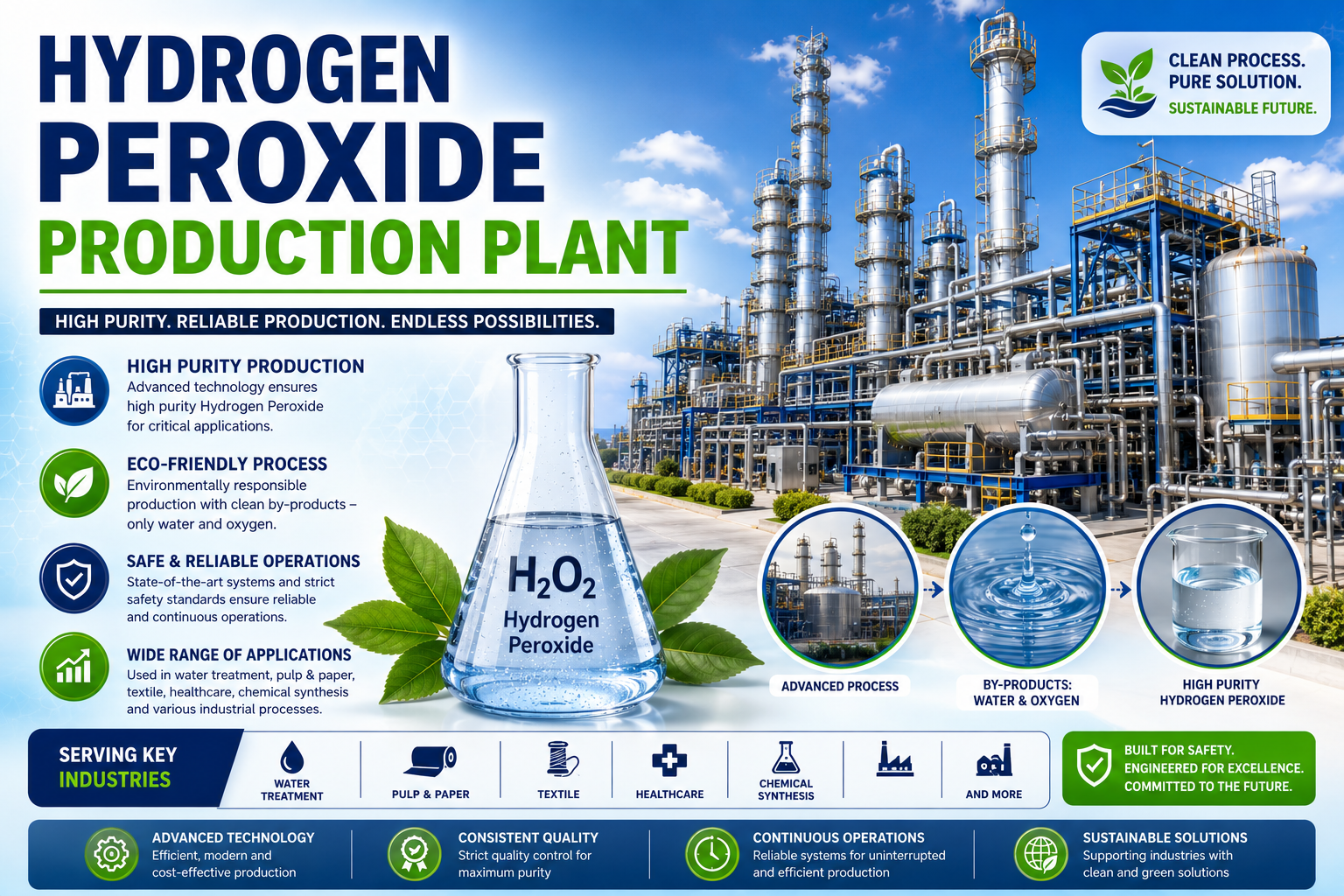
A Detailed DPR Covering CapEx, OpEx, Anthraquinone Autoxidation Process, ROI Analysis, and the Global Opportunity in Textile Bleaching, and Chemical Synthesis
BROOKLYN, NY, UNITED STATES, May 19, 2026 /EINPresswire.com/ -- Setting up a hydrogen peroxide production plant gives you access to one of the most versatile industrial chemicals in global use. Hydrogen peroxide is the preferred oxidant across bleaching, disinfection, and oxidation applications because it decomposes completely into water and oxygen - leaving no harmful residues and meeting tightening environmental regulations that chlorine-based alternatives cannot. It is simultaneously a commodity chemical with stable baseload demand from textiles and paper, and a growth chemical in water treatment, electronics, and downstream chemical synthesis. The anthraquinone process hydrogen peroxide plant is a continuous, large-scale production operation with well-established technology and predictable cost structure.IMARC Group’s Hydrogen Peroxide Production Plant Project Report is a complete DPR and hydrogen peroxide production feasibility study for chemical manufacturers, investors, and project developers. It covers the full H2O2 production plant setup - from working solution preparation through hydrogenation, oxidation, extraction, purification, and concentration - with complete hydrogen peroxide plant CapEx and OpEx modelling and 10-year financial projections.
𝐑𝐞𝐪𝐮𝐞𝐬𝐭 𝐟𝐨𝐫 𝐚 𝐒𝐚𝐦𝐩𝐥𝐞 𝐑𝐞𝐩𝐨𝐫𝐭: https://www.imarcgroup.com/hydrogen-peroxide-manufacturing-plant-project-report/requestsample
𝐈𝐧𝐯𝐞𝐬𝐭𝐦𝐞𝐧𝐭 𝐃𝐫𝐢𝐯𝐞𝐫𝐬 𝐚𝐧𝐝 𝐌𝐚𝐫𝐤𝐞𝐭 𝐎𝐩𝐩𝐨𝐫𝐭𝐮𝐧𝐢𝐭𝐲
Three forces are driving consistent demand growth for hydrogen peroxide production:
𝐄𝐧𝐯𝐢𝐫𝐨𝐧𝐦𝐞𝐧𝐭𝐚𝐥 𝐫𝐞𝐠𝐮𝐥𝐚𝐭𝐢𝐨𝐧𝐬 𝐫𝐞𝐩𝐥𝐚𝐜𝐢𝐧𝐠 𝐜𝐡𝐥𝐨𝐫𝐢𝐧𝐞 𝐰𝐢𝐭𝐡 𝐡𝐲𝐝𝐫𝐨𝐠𝐞𝐧 𝐩𝐞𝐫𝐨𝐱𝐢𝐝𝐞: Chlorine-based bleaching agents generate organochlorine compounds as by-products - compounds classified as persistent organic pollutants under multiple international frameworks. Pulp and paper mills across North America, Europe, and increasingly Asia are transitioning to Elemental Chlorine Free (ECF) and Totally Chlorine Free (TCF) bleaching sequences that use hydrogen peroxide as the primary oxidant. Textile mills face similar pressure from brands committing to ZDHC (Zero Discharge of Hazardous Chemicals) standards. Each new environmental compliance requirement in these sectors is a hydrogen peroxide demand creation event.
𝐇𝐏𝐏𝐎 𝐭𝐞𝐜𝐡𝐧𝐨𝐥𝐨𝐠𝐲 𝐨𝐩𝐞𝐧𝐢𝐧𝐠 𝐚 𝐥𝐚𝐫𝐠𝐞 𝐜𝐡𝐞𝐦𝐢𝐜𝐚𝐥 𝐬𝐲𝐧𝐭𝐡𝐞𝐬𝐢𝐬 𝐦𝐚𝐫𝐤𝐞𝐭: HPPO (Hydrogen Peroxide to Propylene Oxide) technology, commercialised by BASF and Evonik, uses hydrogen peroxide as the direct oxidant for propylene oxide production - one of the largest-volume chemical intermediates globally. This application requires high-purity, concentrated hydrogen peroxide at industrial scale and creates a direct link between H2O2 production capacity and the propylene oxide supply chain. Large-scale chemical complexes integrating hydrogen peroxide production with downstream HPPO units represent a growing commercial model.
𝐖𝐚𝐭𝐞𝐫 𝐭𝐫𝐞𝐚𝐭𝐦𝐞𝐧𝐭 𝐢𝐧𝐟𝐫𝐚𝐬𝐭𝐫𝐮𝐜𝐭𝐮𝐫𝐞 𝐠𝐫𝐨𝐰𝐭𝐡 𝐜𝐫𝐞𝐚𝐭𝐢𝐧𝐠 𝐬𝐮𝐬𝐭𝐚𝐢𝐧𝐞𝐝 𝐢𝐧𝐬𝐭𝐢𝐭𝐮𝐭𝐢𝐨𝐧𝐚𝐥 𝐝𝐞𝐦𝐚𝐧𝐝: Municipal water treatment, industrial wastewater treatment, and groundwater remediation all use hydrogen peroxide. India’s Clean Ganga Mission, national urban water infrastructure programmes, and industrial effluent treatment mandates are driving consistent domestic demand. Globally, increasing awareness of PFAS, pharmaceutical residues, and industrial pollutants in water bodies is expanding the application of advanced oxidation processes (AOPs) - all of which use hydrogen peroxide as a core reagent.
𝐀𝐩𝐩𝐥𝐢𝐜𝐚𝐭𝐢𝐨𝐧 𝐑𝐚𝐧𝐠𝐞 𝐚𝐧𝐝 𝐏𝐫𝐨𝐝𝐮𝐜𝐭 𝐆𝐫𝐚𝐝𝐞𝐬
A hydrogen peroxide production plant’s commercial output is defined by concentration and purity grade, each targeting distinct end-use segments:
• 𝟑𝟓% 𝐢𝐧𝐝𝐮𝐬𝐭𝐫𝐢𝐚𝐥 𝐠𝐫𝐚𝐝𝐞 𝐇2𝐎2: The most widely produced and consumed concentration. Used across textile bleaching, pulp and paper ECF/TCF bleaching, and wastewater treatment. The standard industrial product for most emerging market customers. Lower transportation risk than higher concentrations.
• 𝟓𝟎% 𝐢𝐧𝐝𝐮𝐬𝐭𝐫𝐢𝐚𝐥 𝐠𝐫𝐚𝐝𝐞 𝐇2𝐎2: Higher concentration reduces transport cost per unit of active oxygen. Preferred by large-volume industrial customers with on-site dilution capability. Dominant in the European pulp and paper industry.
• 𝟔𝟎-𝟕𝟎% 𝐭𝐞𝐜𝐡𝐧𝐢𝐜𝐚𝐥 𝐠𝐫𝐚𝐝𝐞 𝐇2𝐎2: Used in chemical synthesis, HPPO processes, and specialist industrial oxidation. Requires enhanced safety handling infrastructure at customer sites. Commands higher pricing per tonne of active oxygen.
• 𝐅𝐨𝐨𝐝 𝐚𝐧𝐝 𝐩𝐡𝐚𝐫𝐦𝐚𝐜𝐞𝐮𝐭𝐢𝐜𝐚𝐥 𝐠𝐫𝐚𝐝𝐞 𝐇2𝐎2 (35–50%): Ultra-high purity with controlled metal ion content and stabiliser package. Used in aseptic food packaging sterilisation (Tetra Pak systems), pharmaceutical production, and medical device sterilisation. The highest-margin product category for an industrial hydrogen peroxide plant.
• 𝐄𝐥𝐞𝐜𝐭𝐫𝐨𝐧𝐢𝐜𝐬 𝐠𝐫𝐚𝐝𝐞 𝐇2𝐎2: Ultra-trace metal impurity specification for semiconductor wafer cleaning, PCB etching, and display panel cleaning. Niche volume but very high per-unit pricing. Requires specialised production and packaging infrastructure.
𝐇𝐲𝐝𝐫𝐨𝐠𝐞𝐧 𝐏𝐞𝐫𝐨𝐱𝐢𝐝𝐞 𝐏𝐫𝐨𝐝𝐮𝐜𝐭𝐢𝐨𝐧 𝐏𝐥𝐚𝐧𝐭 𝐅𝐞𝐚𝐬𝐢𝐛𝐢𝐥𝐢𝐭𝐲 𝐑𝐞𝐩𝐨𝐫𝐭: https://www.imarcgroup.com/hydrogen-peroxide-manufacturing-plant-project-report
𝐇𝐨𝐰 𝐚 𝐇𝐲𝐝𝐫𝐨𝐠𝐞𝐧 𝐏𝐞𝐫𝐨𝐱𝐢𝐝𝐞 𝐏𝐫𝐨𝐝𝐮𝐜𝐭𝐢𝐨𝐧 𝐏𝐥𝐚𝐧𝐭 𝐖𝐨𝐫𝐤𝐬 - 𝐓𝐡𝐞 𝐀𝐧𝐭𝐡𝐫𝐚𝐪𝐮𝐢𝐧𝐨𝐧𝐞 𝐀𝐮𝐭𝐨𝐱𝐢𝐝𝐚𝐭𝐢𝐨𝐧 𝐏𝐫𝐨𝐜𝐞𝐬𝐬
Over 95% of global hydrogen peroxide is produced by the anthraquinone autoxidation (AO) process. The process is continuous, cyclic, and capital-intensive, with the working solution circulating through hydrogenation and oxidation stages repeatedly:
• 𝐖𝐨𝐫𝐤𝐢𝐧𝐠 𝐬𝐨𝐥𝐮𝐭𝐢𝐨𝐧 𝐩𝐫𝐞𝐩𝐚𝐫𝐚𝐭𝐢𝐨𝐧: Anthraquinone derivatives (typically 2-ethylanthraquinone, 2-EAQ) are dissolved in a mixed organic solvent system (aromatic and aliphatic components) to form the working solution. The working solution is the carrier medium for the entire cyclic process and represents a significant component of initial working capital
• 𝐇𝐲𝐝𝐫𝐨𝐠𝐞𝐧𝐚𝐭𝐢𝐨𝐧: The working solution passes through a fixed-bed or trickle-bed reactor containing a palladium catalyst. Hydrogen gas (H2) is introduced and reacts with the anthraquinone to form anthrahydroquinone (AHQ). Reaction temperature and pressure, catalyst activity, and H2 purity all affect conversion efficiency. Hydrogen is the primary raw material cost driver at 60–70% of total OpEx
• 𝐎𝐱𝐢𝐝𝐚𝐭𝐢𝐨𝐧: The reduced working solution (containing AHQ) is contacted with air or oxygen in an oxidation tower. AHQ reacts with O2 to regenerate anthraquinone and simultaneously produce hydrogen peroxide dissolved in the working solution. The regenerated working solution is ready for the next hydrogenation cycle
• 𝐄𝐱𝐭𝐫𝐚𝐜𝐭𝐢𝐨𝐧: Hydrogen peroxide is selectively extracted from the working solution into purified water using a countercurrent liquid-liquid extraction column. The resulting aqueous H2O2 solution (typically 20–25%) is separated from the working solution, which is returned to the hydrogenation step
• 𝐏𝐮𝐫𝐢𝐟𝐢𝐜𝐚𝐭𝐢𝐨𝐧 𝐚𝐧𝐝 𝐬𝐭𝐚𝐛𝐢𝐥𝐢𝐬𝐚𝐭𝐢𝐨𝐧: The aqueous H2O2 extract is purified by distillation and ion exchange to remove organic impurities, stabilisers are added to control decomposition rate during storage and transport
• 𝐂𝐨𝐧𝐜𝐞𝐧𝐭𝐫𝐚𝐭𝐢𝐨𝐧: For 50%, 60%, or higher concentration products, the extracted H2O2 solution is concentrated by vacuum distillation. This step significantly increases energy consumption and requires careful safety management given H2O2 decomposition risks at elevated concentrations
• 𝐐𝐮𝐚𝐥𝐢𝐭𝐲 𝐚𝐧𝐚𝐥𝐲𝐬𝐢𝐬 𝐚𝐧𝐝 𝐬𝐭𝐨𝐫𝐚𝐠𝐞: Each batch is tested for concentration (active oxygen content), stability, iron content, acidity, and impurity profile. Product is stored in passivated stainless steel or HDPE-lined vessels and dispatched in ISO tank containers, road tankers, or drums depending on customer and concentration
𝐏𝐥𝐚𝐧𝐭 𝐈𝐧𝐯𝐞𝐬𝐭𝐦𝐞𝐧𝐭 𝐄𝐜𝐨𝐧𝐨𝐦𝐢𝐜𝐬
𝐏𝐫𝐨𝐝𝐮𝐜𝐭𝐢𝐨𝐧 𝐂𝐚𝐩𝐚𝐜𝐢𝐭𝐲:
• The proposed production facility is designed with an annual production capacity ranging between 50,000 - 100,000 MT, enabling economies of scale while maintaining operational flexibility
𝐏𝐫𝐨𝐟𝐢𝐭𝐚𝐛𝐢𝐥𝐢𝐭𝐲 𝐁𝐞𝐧𝐜𝐡𝐦𝐚𝐫𝐤𝐬:
• Gross Profit: 25–35%
• Net Profit: 10–15% after financing costs, depreciation, and taxes
𝐎𝐩𝐞𝐫𝐚𝐭𝐢𝐧𝐠 𝐂𝐨𝐬𝐭 (𝐎𝐩𝐄𝐱) 𝐁𝐫𝐞𝐚𝐤𝐝𝐨𝐰𝐧:
• Raw Materials (primarily hydrogen gas): 60–70% of total OpEx. Hydrogen price and purity are the dominant cost and quality variables
• Utilities: 15–20% of OpEx
𝐇𝐲𝐝𝐫𝐨𝐠𝐞𝐧 𝐏𝐞𝐫𝐨𝐱𝐢𝐝𝐞 𝐏𝐥𝐚𝐧𝐭 𝐂𝐚𝐩𝐄𝐱 𝐂𝐨𝐦𝐩𝐨𝐧𝐞𝐧𝐭𝐬:
• 𝐋𝐚𝐧𝐝 𝐚𝐧𝐝 𝐟𝐚𝐜𝐭𝐨𝐫𝐲: safety exclusion zones required for hydrogen handling and H2O2 storage; pressure vessel areas, extraction column hall, storage tank farm
• 𝐂𝐨𝐫𝐞 𝐩𝐫𝐨𝐜𝐞𝐬𝐬 𝐞𝐪𝐮𝐢𝐩𝐦𝐞𝐧𝐭: hydrogenation reactor, oxidation tower, extraction column, distillation column for concentration, ion exchange purification system
• 𝐔𝐭𝐢𝐥𝐢𝐭𝐢𝐞𝐬 𝐚𝐧𝐝 𝐬𝐚𝐟𝐞𝐭𝐲: hydrogen supply infrastructure directly influences hydrogen peroxide production unit cost - pipeline, on-site SMR/electrolyser, safety systems for H2 and H2O2 handling (explosion-proof electrical, nitrogen blanketing, relief systems)
• 𝐖𝐨𝐫𝐤𝐢𝐧𝐠 𝐬𝐨𝐥𝐮𝐭𝐢𝐨𝐧 𝐢𝐧𝐯𝐞𝐧𝐭𝐨𝐫𝐲: anthraquinone derivatives and solvent represent a significant initial investment and ongoing replacement cost
• 𝐏𝐫𝐞-𝐨𝐩𝐞𝐫𝐚𝐭𝐢𝐯𝐞 𝐜𝐨𝐬𝐭𝐬: process licence fee (licensed technology from Evonik, Solvay, or other process licensors), commissioning, operator training, and initial working capital
𝐒𝐩𝐞𝐚𝐤 𝐭𝐨 𝐀𝐧𝐚𝐥𝐲𝐬𝐭 𝐟𝐨𝐫 𝐂𝐮𝐬𝐭𝐨𝐦𝐢𝐳𝐞𝐝 𝐑𝐞𝐩𝐨𝐫𝐭: https://www.imarcgroup.com/request?type=report&id=9119&flag=C
𝐆𝐥𝐨𝐛𝐚𝐥 𝐌𝐚𝐫𝐤𝐞𝐭 𝐚𝐧𝐝 𝐑𝐞𝐠𝐢𝐨𝐧𝐚𝐥 𝐃𝐞𝐦𝐚𝐧𝐝
The global hydrogen peroxide market, valued at USD 3.62 billion in 2025, is projected to reach USD 4.94 billion by 2034 at a CAGR of 3.5%. Asia Pacific accounts for the largest share of global consumption at approximately 43.9%, driven by large textile, pulp and paper, and chemical industries in China, India, and Southeast Asia.
𝐈𝐧𝐝𝐢𝐚: The India hydrogen peroxide market was valued at USD 198.9 million in 2025 and is projected to reach USD 301.3 million by 2034 at a CAGR of 4.59%. Textile wet processing is India’s largest end-use segment, followed by pulp and paper bleaching and wastewater treatment. India’s 2025 NITI Aayog chemical industry report identifies hydrogen peroxide as a strategic chemical for domestic production. The Clean Ganga Mission and national water treatment infrastructure investments provide institutional demand. Key domestic producers include Gujarat Alkalies and Chemicals Ltd. (GACL) and National Peroxide Limited.
𝐂𝐡𝐢𝐧𝐚: The world’s largest consumer and producer of hydrogen peroxide. China’s massive textile production base, expanding paper industry, and growing water treatment infrastructure create enormous domestic demand. Chinese capacity growth has historically influenced global pricing and trade flows.
𝐄𝐮𝐫𝐨𝐩𝐞: Mature, high-quality market. ECF and TCF bleaching standards are well-established in pulp and paper. HPPO technology adoption is most advanced in Europe - the largest hydrogen peroxide application in terms of per-unit volume consumption. Key producers include Evonik (Germany), Solvay (Belgium), and Arkema (France).
𝐍𝐨𝐫𝐭𝐡 𝐀𝐦𝐞𝐫𝐢𝐜𝐚: Pulp and paper bleaching and water treatment are the dominant demand segments. Specialty high-purity grades for electronics and pharmaceutical applications are a growing premium segment. Advanced oxidation processes using hydrogen peroxide are being deployed at scale across municipal water utilities.
𝐒𝐨𝐮𝐭𝐡𝐞𝐚𝐬𝐭 𝐀𝐬𝐢𝐚: Vietnam, Indonesia, and Thailand have growing textile and paper industries creating increasing H2O2 demand. Evonik completed the acquisition of Thai Peroxide Co., Ltd. in December 2023, signalling active investment in Southeast Asian production capacity.
𝐒𝐢𝐭𝐞 𝐒𝐞𝐥𝐞𝐜𝐭𝐢𝐨𝐧 𝐚𝐧𝐝 𝐏𝐨𝐥𝐢𝐜𝐲 𝐒𝐮𝐩𝐩𝐨𝐫𝐭
Location decisions for a hydrogen peroxide production plant setup directly affect raw material cost, safety compliance, and logistics economics:
• 𝐇𝐲𝐝𝐫𝐨𝐠𝐞𝐧 𝐬𝐮𝐩𝐩𝐥𝐲: Hydrogen is the primary raw material at 60–70% of total OpEx. Sites near chlor-alkali plants (which produce hydrogen as a by-product), steam methane reforming units, or electrolysis facilities minimise hydrogen supply cost. Pipeline hydrogen access is the optimal configuration for a large-scale hydrogen peroxide production plant
• 𝐒𝐚𝐟𝐞𝐭𝐲 𝐳𝐨𝐧𝐞 𝐫𝐞𝐪𝐮𝐢𝐫𝐞𝐦𝐞𝐧𝐭𝐬: H2O2 is a strong oxidiser and concentrated H2O2 presents explosion risk under contamination or heat. Industrial zones with established hazardous chemical handling infrastructure, safety exclusion zone availability, and trained emergency response capability are required
• 𝐂𝐮𝐬𝐭𝐨𝐦𝐞𝐫 𝐩𝐫𝐨𝐱𝐢𝐦𝐢𝐭𝐲: H2O2 is typically supplied as an aqueous solution with limited shelf life and transport constraints. Plants located within 200–300 km of major textile mills, paper mills, or chemical plants minimise outbound logistics cost and reduce product concentration requirements
• 𝐏𝐫𝐨𝐜𝐞𝐬𝐬 𝐭𝐞𝐜𝐡𝐧𝐨𝐥𝐨𝐠𝐲 𝐥𝐢𝐜𝐞𝐧𝐬𝐢𝐧𝐠: Anthraquinone process technology is licensed by Evonik, Solvay, Arkema, and Mitsubishi Gas Chemical. Technology licence selection affects CapEx, process efficiency, and catalyst sourcing. Evaluation of licence terms, royalty structure, and local adaptation support is a key investment decision
• 𝐆𝐨𝐯𝐞𝐫𝐧𝐦𝐞𝐧𝐭 𝐩𝐨𝐥𝐢𝐜𝐲: India - Specialty Chemicals policy under Atmanirbhar Bharat, PCPIR (Petroleum, Chemicals and Petrochemicals Investment Region) incentives for large chemical plants, state-level investment subsidies in Gujarat and Maharashtra. EU - REACH compliance for H2O2 production and supply. Export incentives available for chemical exports under RoDTEP
𝐑𝐞𝐩𝐨𝐫𝐭 𝐂𝐨𝐯𝐞𝐫𝐚𝐠𝐞
IMARC Group’s Hydrogen Peroxide Plant Project Report is a complete hydrogen peroxide production business plan and technical reference:
• 𝐅𝐮𝐥𝐥 𝐩𝐫𝐨𝐜𝐞𝐬𝐬 𝐟𝐥𝐨𝐰 𝐰𝐢𝐭𝐡 𝐦𝐚𝐬𝐬 𝐛𝐚𝐥𝐚𝐧𝐜𝐞: from working solution preparation through hydrogenation, oxidation, extraction, purification, concentration, and dispatch
• 𝐇𝐲𝐝𝐫𝐨𝐠𝐞𝐧 𝐩𝐞𝐫𝐨𝐱𝐢𝐝𝐞 𝐩𝐥𝐚𝐧𝐭 𝐂𝐚𝐩𝐄𝐱 𝐛𝐫𝐞𝐚𝐤𝐝𝐨𝐰𝐧: hydrogenation reactor, oxidation tower, extraction column, distillation system, storage and safety infrastructure
• 10-𝐲𝐞𝐚𝐫 𝐎𝐩𝐄𝐱 𝐩𝐫𝐨𝐣𝐞𝐜𝐭𝐢𝐨𝐧𝐬: hydrogen peroxide plant OpEx covering hydrogen procurement, anthraquinone working solution costs, utilities, labour, and maintenance
• 𝐅𝐢𝐧𝐚𝐧𝐜𝐢𝐚𝐥 𝐦𝐨𝐝𝐞𝐥: hydrogen peroxide plant ROI, IRR, NPV, DSCR, break-even, and sensitivity tables across hydrogen price and capacity utilisation scenarios
• 𝐓𝐞𝐜𝐡𝐧𝐨𝐥𝐨𝐠𝐲 𝐥𝐢𝐜𝐞𝐧𝐜𝐞 𝐞𝐯𝐚𝐥𝐮𝐚𝐭𝐢𝐨𝐧: Evonik, Solvay, and Arkema process comparison - CapEx, efficiency, and operational flexibility
• 𝐏𝐫𝐨𝐝𝐮𝐜𝐭 𝐦𝐢𝐱 𝐬𝐭𝐫𝐚𝐭𝐞𝐠𝐲: 35% versus 50% versus food and pharmaceutical grade - margin and market access comparison for an industrial hydrogen peroxide plant
• 𝐇𝐲𝐝𝐫𝐨𝐠𝐞𝐧 𝐩𝐞𝐫𝐨𝐱𝐢𝐝𝐞 𝐩𝐥𝐚𝐧𝐭 𝐬𝐞𝐭𝐮𝐩 𝐜𝐨𝐬𝐭 𝐛𝐞𝐧𝐜𝐡𝐦𝐚𝐫𝐤𝐢𝐧𝐠: across different capacity and concentration configurations
• 𝐒𝐚𝐟𝐞𝐭𝐲 𝐚𝐧𝐝 𝐫𝐞𝐠𝐮𝐥𝐚𝐭𝐨𝐫𝐲 𝐜𝐨𝐦𝐩𝐥𝐢𝐚𝐧𝐜𝐞: PESO authorisation, MSIHC Rules compliance, ADR/IMDG transport requirements, process safety management
The report is built for chemical manufacturers evaluating a hydrogen peroxide plant investment, industrial groups considering backward integration into H2O2 supply, and banks requiring a bankable hydrogen peroxide production feasibility study for project financing.
𝐁𝐫𝐨𝐰𝐬𝐞 𝐌𝐨𝐫𝐞 𝐅𝐞𝐚𝐬𝐢𝐛𝐢𝐥𝐢𝐭𝐲 𝐒𝐭𝐮𝐝𝐲 𝐚𝐧𝐝 𝐁𝐮𝐬𝐢𝐧𝐞𝐬𝐬 𝐏𝐥𝐚𝐧 𝐑𝐞𝐩𝐨𝐫𝐭𝐬 𝐛𝐲 𝐈𝐌𝐀𝐑𝐂 𝐆𝐫𝐨𝐮𝐩:
• 𝐄𝐥𝐞𝐜𝐭𝐫𝐢𝐜 𝐕𝐞𝐡𝐢𝐜𝐥𝐞 𝐁𝐚𝐭𝐭𝐞𝐫𝐲 𝐌𝐚𝐧𝐮𝐟𝐚𝐜𝐭𝐮𝐫𝐢𝐧𝐠 𝐏𝐥𝐚𝐧𝐭 𝐏𝐫𝐨𝐣𝐞𝐜𝐭 𝐑𝐞𝐩𝐨𝐫𝐭: https://www.imarcgroup.com/electric-vehicle-battery-manufacturing-plant-project-report
• 𝐄𝐥𝐞𝐜𝐭𝐫𝐢𝐜 𝐕𝐞𝐡𝐢𝐜𝐥𝐞 𝐂𝐡𝐚𝐫𝐠𝐢𝐧𝐠 𝐒𝐭𝐚𝐭𝐢𝐨𝐧 𝐌𝐚𝐧𝐮𝐟𝐚𝐜𝐭𝐮𝐫𝐢𝐧𝐠 𝐏𝐥𝐚𝐧𝐭 𝐏𝐫𝐨𝐣𝐞𝐜𝐭 𝐑𝐞𝐩𝐨𝐫𝐭: https://www.imarcgroup.com/electric-vehicle-charging-station-manufacturing-plant-project-report
• 𝐄𝐧𝐞𝐫𝐠𝐲 𝐃𝐫𝐢𝐧𝐤 𝐌𝐚𝐧𝐮𝐟𝐚𝐜𝐭𝐮𝐫𝐢𝐧𝐠 𝐏𝐥𝐚𝐧𝐭 𝐏𝐫𝐨𝐣𝐞𝐜𝐭 𝐑𝐞𝐩𝐨𝐫𝐭: https://www.imarcgroup.com/energy-drink-manufacturing-plant-project-report
• 𝐃𝐢𝐜𝐚𝐥𝐜𝐢𝐮𝐦 𝐏𝐡𝐨𝐬𝐩𝐡𝐚𝐭𝐞 𝐏𝐫𝐨𝐝𝐮𝐜𝐭𝐢𝐨𝐧 𝐏𝐥𝐚𝐧𝐭 𝐏𝐫𝐨𝐣𝐞𝐜𝐭 𝐑𝐞𝐩𝐨𝐫𝐭: https://www.imarcgroup.com/dicalcium-phosphate-manufacturing-plant-project-report
• 𝐂𝐢𝐭𝐫𝐢𝐜 𝐀𝐜𝐢𝐝 𝐏𝐫𝐨𝐝𝐮𝐜𝐭𝐢𝐨𝐧 𝐏𝐥𝐚𝐧𝐭 𝐏𝐫𝐨𝐣𝐞𝐜𝐭 𝐑𝐞𝐩𝐨𝐫𝐭: https://www.imarcgroup.com/citric-acid-manufacturing-plant-project-report
• 𝐂𝐚𝐬𝐬𝐚𝐯𝐚 𝐏𝐫𝐨𝐜𝐞𝐬𝐬𝐢𝐧𝐠 𝐏𝐥𝐚𝐧𝐭 𝐏𝐫𝐨𝐣𝐞𝐜𝐭 𝐑𝐞𝐩𝐨𝐫𝐭: https://www.imarcgroup.com/cassava-processing-plant-project-report
• 𝐂𝐚𝐭𝐡𝐞𝐭𝐞𝐫 𝐌𝐚𝐧𝐮𝐟𝐚𝐜𝐭𝐮𝐫𝐢𝐧𝐠 𝐏𝐥𝐚𝐧𝐭 𝐏𝐫𝐨𝐣𝐞𝐜𝐭 𝐑𝐞𝐩𝐨𝐫𝐭: https://www.imarcgroup.com/catheter-manufacturing-plant-project-report
• 𝐁𝐢𝐨𝐝𝐞𝐠𝐫𝐚𝐝𝐚𝐛𝐥𝐞 𝐏𝐥𝐚𝐬𝐭𝐢𝐜 𝐆𝐫𝐚𝐧𝐮𝐥𝐞𝐬 𝐌𝐚𝐧𝐮𝐟𝐚𝐜𝐭𝐮𝐫𝐢𝐧𝐠 𝐏𝐥𝐚𝐧𝐭 𝐏𝐫𝐨𝐣𝐞𝐜𝐭 𝐑𝐞𝐩𝐨𝐫𝐭: https://www.imarcgroup.com/biodegradable-plastic-granules-manufacturing-plant-project-report
• 𝐁𝐚𝐭𝐭𝐞𝐫𝐲 𝐌𝐚𝐧𝐮𝐟𝐚𝐜𝐭𝐮𝐫𝐢𝐧𝐠 𝐏𝐥𝐚𝐧𝐭 𝐏𝐫𝐨𝐣𝐞𝐜𝐭 𝐑𝐞𝐩𝐨𝐫𝐭: https://www.imarcgroup.com/battery-manufacturing-plant-project-report
• 𝐒𝐨𝐲𝐚 𝐂𝐡𝐮𝐧𝐤𝐬 𝐌𝐚𝐧𝐮𝐟𝐚𝐜𝐭𝐮𝐫𝐢𝐧𝐠 𝐏𝐥𝐚𝐧𝐭 𝐏𝐫𝐨𝐣𝐞𝐜𝐭 𝐑𝐞𝐩𝐨𝐫𝐭: https://www.imarcgroup.com/soya-chunks-manufacturing-plant-project-report
𝐀𝐛𝐨𝐮𝐭 𝐈𝐌𝐀𝐑𝐂 𝐆𝐫𝐨𝐮𝐩
IMARC Group is a global market research and management consulting firm. Its plant setup and DPR practice serves investors, developers, government agencies, and banks across 50+ countries, delivering reports used for loan documentation, investment approvals, and engineering planning.
Elena Anderson
IMARC Services Private Limited
+1 201-971-6302
email us here
Legal Disclaimer:
EIN Presswire provides this news content "as is" without warranty of any kind. We do not accept any responsibility or liability for the accuracy, content, images, videos, licenses, completeness, legality, or reliability of the information contained in this article. If you have any complaints or copyright issues related to this article, kindly contact the author above.
