

Global take on agriculture news
Provided by AGP
Aquafeed Production Plant Setup, Feasibility Study, ROI Analysis and Business Plan Consultant
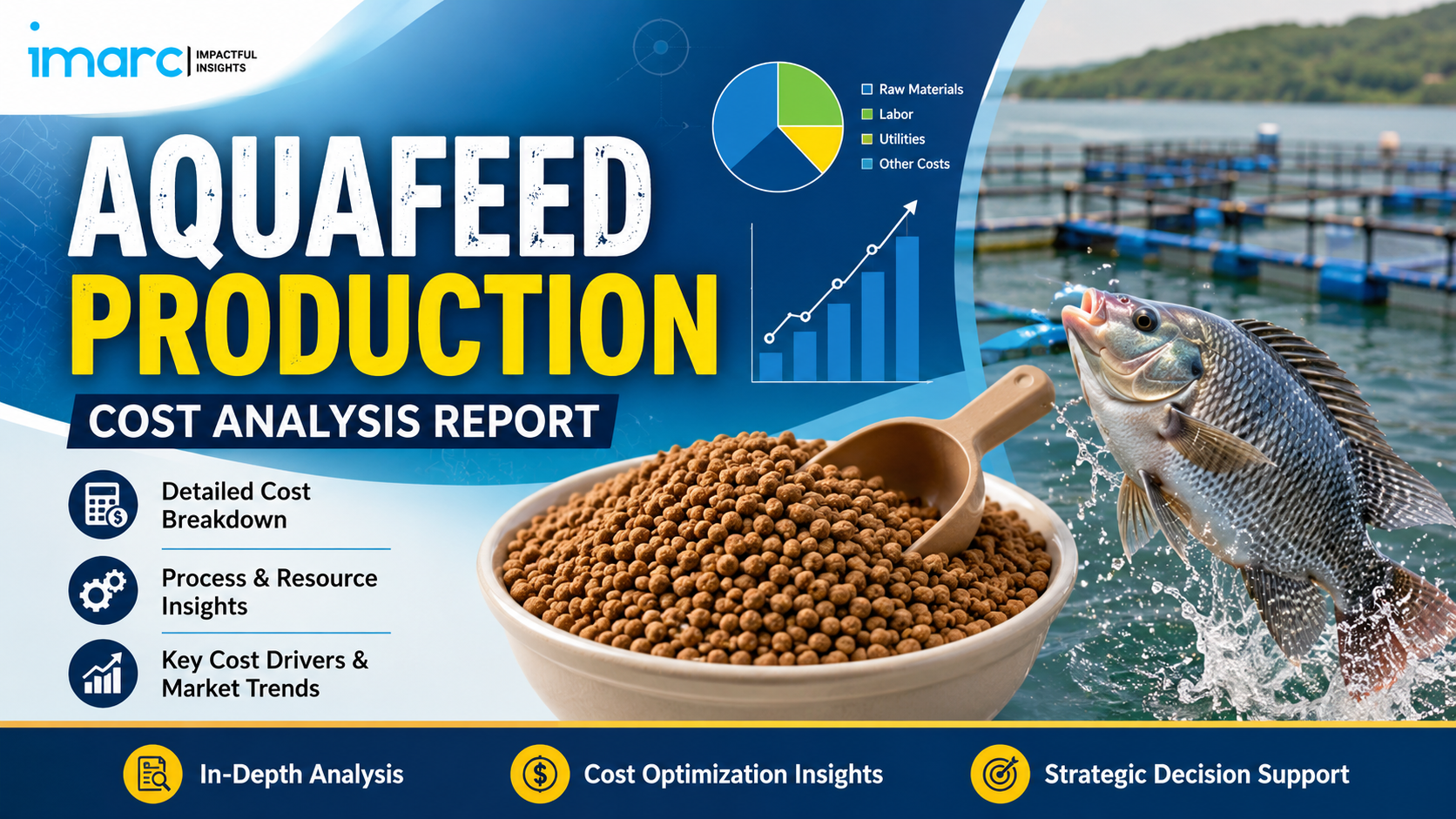
Aquafeed Production Plant Cost
A Detailed DPR Covering CapEx, OpEx, Pelleting and Extrusion, and the Global Opportunity in Shrimp, Carp, Tilapia, and Specialty Aquaculture Feed Production
BROOKLYN, NY, UNITED STATES, May 19, 2026 /EINPresswire.com/ -- Setting up an aquafeed production plant puts you at the production base of the fastest-growing protein sector globally. Aquaculture now supplies over half the world’s consumed fish, and farmed fish cannot grow without commercially formulated feed. India is the world’s third-largest aquaculture producer by volume, yet operates fewer than 30 commercial-scale feed mills and imports more than 50% of its aquafeed requirement. Every unit of domestically produced aquafeed displaces an import and captures a share of a demand base growing steadily with India’s expanding aquaculture capacity, shrimp export obligations, and government-backed production targets.IMARC Group’s Aquafeed Production Plant Project Report is a complete DPR and aquafeed production feasibility study for agri-business investors, feed manufacturers, and aquaculture entrepreneurs. It covers the full aquafeed production plant setup - from raw material intake and milling through mixing, steam conditioning, pellet pressing or extrusion, coating, and packaging - with complete aquafeed plant CapEx and OpEx modelling and 10-year financial projections.
𝗥𝗲𝗾𝘂𝗲𝘀𝘁 𝗳𝗼𝗿 𝗮 𝗦𝗮𝗺𝗽𝗹𝗲 𝗥𝗲𝗽𝗼𝗿𝘁: https://www.imarcgroup.com/aquafeed-production-cost-analysis-report/requestsample
𝐈𝐧𝐯𝐞𝐬𝐭𝐦𝐞𝐧𝐭 𝐃𝐫𝐢𝐯𝐞𝐫𝐬 𝐚𝐧𝐝 𝐌𝐚𝐫𝐤𝐞𝐭 𝐎𝐩𝐩𝐨𝐫𝐭𝐮𝐧𝐢𝐭𝐲
Three forces are structurally expanding aquafeed demand in India and globally:
𝐒𝐡𝐫𝐢𝐦𝐩 𝐞𝐱𝐩𝐨𝐫𝐭 𝐠𝐫𝐨𝐰𝐭𝐡 𝐫𝐞𝐪𝐮𝐢𝐫𝐢𝐧𝐠 𝐜𝐨𝐧𝐬𝐢𝐬𝐭𝐞𝐧𝐭, 𝐡𝐢𝐠𝐡-𝐪𝐮𝐚𝐥𝐢𝐭𝐲 𝐟𝐞𝐞𝐝 𝐬𝐮𝐩𝐩𝐥𝐲: India’s shrimp exports are the backbone of its fisheries economy, contributing approximately 70% of total fishery export earnings of USD 7.9 billion. Vannamei shrimp farming is concentrated in Andhra Pradesh, Tamil Nadu, Odisha, and Gujarat - all of which have shifted from traditional rice bran and oilcake mixtures to scientifically formulated commercial aquafeed. Export-oriented farms operate at FCRs (feed conversion ratios) below 1.5:1, requiring high-protein, species-specific pellets that meet international buyer quality and certification standards. A shrimp feed manufacturing plant co-located with or supplying to India’s coastal shrimp belt accesses a large, quality-driven procurement base.
𝐆𝐨𝐯𝐞𝐫𝐧𝐦𝐞𝐧𝐭 𝐩𝐫𝐨𝐝𝐮𝐜𝐭𝐢𝐨𝐧 𝐭𝐚𝐫𝐠𝐞𝐭𝐬 𝐜𝐫𝐞𝐚𝐭𝐢𝐧𝐠 𝐢𝐧𝐬𝐭𝐢𝐭𝐮𝐭𝐢𝐨𝐧𝐚𝐥 𝐝𝐞𝐦𝐚𝐧𝐝: Pradhan Mantri Matsya Sampada Yojana (PMMSY) targets doubling India’s fish production, with subsidies for feed-based aquaculture, hatchery development, and processing infrastructure. Blue Revolution 2.0 and the National Fisheries Development Board provide capital support for pond development and feed adoption. As the government pushes semi-intensive and intensive farming to replace extensive practices, commercial aquafeed transitions from optional to essential for the majority of Indian fish and shrimp producers.
𝐅𝐢𝐬𝐡𝐦𝐞𝐚𝐥 𝐢𝐦𝐩𝐨𝐫𝐭 𝐝𝐞𝐩𝐞𝐧𝐝𝐞𝐧𝐜𝐲 𝐜𝐫𝐞𝐚𝐭𝐢𝐧𝐠 𝐚 𝐝𝐨𝐦𝐞𝐬𝐭𝐢𝐜 𝐩𝐫𝐨𝐜𝐞𝐬𝐬𝐢𝐧𝐠 𝐨𝐩𝐩𝐨𝐫𝐭𝐮𝐧𝐢𝐭𝐲: India imports a significant share of its fishmeal and aquafeed supply from South America, Southeast Asia, and Europe. Fishmeal prices fluctuated between USD 1,200–1,500 per MT in 2024, exposing aquafeed manufacturers to raw material price risk. Domestic fishmeal processing from India’s marine catch -which reached 3.45 million MT in 2024- and the development of alternative protein sources (soybean meal, insect meal) reduces import dependency, lowers aquafeed production unit cost, and improves supply chain resilience for domestic producers.
𝐀𝐪𝐮𝐚𝐟𝐞𝐞𝐝 𝐓𝐲𝐩𝐞𝐬 𝐚𝐧𝐝 𝐏𝐫𝐨𝐝𝐮𝐜𝐭 𝐑𝐚𝐧𝐠𝐞
An aquafeed production plant’s product range is defined by target species, growth stage, and feed form - each requiring a distinct formulation and process configuration:
• 𝐕𝐚𝐧𝐧𝐚𝐦𝐞𝐢 𝐬𝐡𝐫𝐢𝐦𝐩 𝐟𝐞𝐞𝐝: The highest-volume commercial aquafeed product in India. Starter (0.2–0.5 mm), grower, and finisher pellets across the production cycle. High protein content (32–40%), tight pellet stability (>120 minutes water stability for shrimp), and anti-nutritional factor control are critical specifications. A fish feed Production plant targeting this segment in Andhra Pradesh or Tamil Nadu accesses India’s largest aquafeed market.
• 𝐂𝐚𝐫𝐩 𝐟𝐞𝐞𝐝 (𝐫𝐨𝐡𝐮, 𝐜𝐚𝐭𝐥𝐚, 𝐦𝐫𝐢𝐠𝐚𝐥): Floating and sinking pellets for India’s freshwater aquaculture belt. Carp represents the largest species category by volume in India’s inland aquaculture. Protein content 25–32%, pellet sizes 2–5 mm. Large demand base across West Bengal, Uttar Pradesh, Bihar, and Odisha.
• 𝐓𝐢𝐥𝐚𝐩𝐢𝐚 𝐚𝐧𝐝 𝐩𝐚𝐧𝐠𝐚𝐬𝐢𝐮𝐬 𝐟𝐞𝐞𝐝: High-growth species with increasing domestic and export demand. Formulated at 28–32% protein with optimised amino acid profiles. Floating extruded pellets are preferred for tilapia. Growing segment as India expands certified aquaculture for Asian export markets.
• 𝐒𝐚𝐥𝐦𝐨𝐧 𝐚𝐧𝐝 𝐭𝐫𝐨𝐮𝐭 𝐟𝐞𝐞𝐝 (𝐜𝐨𝐥𝐝-𝐰𝐚𝐭𝐞𝐫 𝐬𝐩𝐞𝐜𝐢𝐞𝐬): Premium-grade high-energy feed for Himalayan and northeastern hill state aquaculture. High lipid content (20–28%), cold-water formulation. Lower volume but high per-tonne value.
• 𝐇𝐚𝐭𝐜𝐡𝐞𝐫𝐲 𝐚𝐧𝐝 𝐧𝐮𝐫𝐬𝐞𝐫𝐲 𝐟𝐞𝐞𝐝𝐬: Microencapsulated and crumbled feeds for post-larvae and fry stages. Ultra-fine particle sizes (50–500 micron), high digestibility, minimal water pollution. Premium pricing per kilogram relative to grow-out pellets.
𝗔𝗾𝘂𝗮𝗳𝗲𝗲𝗱 𝗣𝗿𝗼𝗱𝘂𝗰𝘁𝗶𝗼𝗻 𝗣𝗹𝗮𝗻𝘁 𝗙𝗲𝗮𝘀𝗶𝗯𝗶𝗹𝗶𝘁𝘆 𝗥𝗲𝗽𝗼𝗿𝘁: https://www.imarcgroup.com/aquafeed-production-cost-analysis-report
𝐇𝐨𝐰 𝐚𝐧 𝐀𝐪𝐮𝐚𝐟𝐞𝐞𝐝 𝐏𝐫𝐨𝐝𝐮𝐜𝐭𝐢𝐨𝐧 𝐏𝐥𝐚𝐧𝐭 𝐖𝐨𝐫𝐤𝐬 - 𝐓𝐡𝐞 𝐆𝐫𝐢𝐧𝐝𝐢𝐧𝐠, 𝐏𝐞𝐥𝐥𝐞𝐭𝐢𝐧𝐠, 𝐚𝐧𝐝 𝐄𝐱𝐭𝐫𝐮𝐬𝐢𝐨𝐧 𝐏𝐫𝐨𝐜𝐞𝐬𝐬
Aquafeed production combines precision ingredient blending with thermal processing to produce nutritionally stable, water-resistant pellets or extruded feed. The choice between pelleting and extrusion determines whether feed floats or sinks and the degree of starch gelatinisation:
• 𝐑𝐚𝐰 𝐦𝐚𝐭𝐞𝐫𝐢𝐚𝐥 𝐫𝐞𝐜𝐞𝐢𝐯𝐢𝐧𝐠 𝐚𝐧𝐝 𝐪𝐮𝐚𝐥𝐢𝐭𝐲 𝐢𝐧𝐬𝐩𝐞𝐜𝐭𝐢𝐨𝐧: Fishmeal, soybean meal, wheat flour, fish oil, vitamin and mineral premixes, and feed additives (probiotics, enzymes, antioxidants) are received and tested. Fishmeal protein content, moisture, TVN (total volatile nitrogen), and heavy metal limits are the primary quality gates. Fishmeal at 75–85% of OpEx makes raw material sourcing the primary determinant of aquafeed plant ROI
• 𝐆𝐫𝐢𝐧𝐝𝐢𝐧𝐠 𝐚𝐧𝐝 𝐩𝐚𝐫𝐭𝐢𝐜𝐥𝐞 𝐬𝐢𝐳𝐞 𝐫𝐞𝐝𝐮𝐜𝐭𝐢𝐨𝐧: Raw materials are hammer-milled to uniform particle size. Particle size consistency directly affects pellet binding and fines generation. Shrimp and hatchery feeds require finer grinding (100–300 micron) than carp or tilapia grow-out feeds
• 𝐖𝐞𝐢𝐠𝐡𝐢𝐧𝐠 𝐚𝐧𝐝 𝐩𝐫𝐞-𝐦𝐢𝐱𝐢𝐧𝐠: Macro and micro ingredients are weighed in batch or continuous systems and blended in a ribbon or paddle mixer. Liquid ingredients (fish oil, binding agents) are added at this stage. Blend uniformity is a critical quality parameter - poor mixing creates nutritional inconsistency across pellets
• 𝐒𝐭𝐞𝐚𝐦 𝐜𝐨𝐧𝐝𝐢𝐭𝐢𝐨𝐧𝐢𝐧𝐠: Mixed dry meal passes through a conditioner where live steam is injected. This raises moisture to 14–18% and temperature to 70–85°C, partially gelatinising starch for binding and reducing microbial load. Conditioning time and steam volume directly affect pellet durability
• 𝐏𝐞𝐥𝐥𝐞𝐭𝐢𝐧𝐠 𝐨𝐫 𝐞𝐱𝐭𝐫𝐮𝐬𝐢𝐨𝐧: For sinking pellets, conditioned mash is pressed through a die ring in a ring-die pellet press. For floating feed, conditioned mash is fed into a twin-screw extruder at higher temperature and pressure (130–180°C, 20–40 bar), creating a puffed, low-density pellet that floats. Extrusion enables higher lipid inclusion and improves digestibility
• 𝐃𝐫𝐲𝐢𝐧𝐠: Pellets or extrudate are dried in a cross-flow or counter-flow dryer to reduce moisture to 10–12%. Uniform drying prevents mould growth during storage
• 𝐂𝐨𝐚𝐭𝐢𝐧𝐠 𝐰𝐢𝐭𝐡 𝐟𝐢𝐬𝐡 𝐨𝐢𝐥 𝐚𝐧𝐝 𝐚𝐝𝐝𝐢𝐭𝐢𝐯𝐞𝐬: Dried pellets pass through a vacuum coater where fish oil, heat-sensitive vitamins, and liquid additives are applied to the surface. Vacuum coating improves lipid inclusion without reducing pellet durability
• 𝐂𝐨𝐨𝐥𝐢𝐧𝐠, 𝐬𝐢𝐞𝐯𝐢𝐧𝐠, 𝐚𝐧𝐝 𝐩𝐚𝐜𝐤𝐚𝐠𝐢𝐧𝐠: Coated pellets are cooled to ambient temperature, sieved to remove fines, and packaged in 25 kg or 50 kg woven bags for retail supply or bulk bags for farm delivery
𝐏𝐥𝐚𝐧𝐭 𝐈𝐧𝐯𝐞𝐬𝐭𝐦𝐞𝐧𝐭 𝐄𝐜𝐨𝐧𝐨𝐦𝐢𝐜𝐬
𝐏𝐫𝐨𝐝𝐮𝐜𝐭𝐢𝐨𝐧 𝐂𝐚𝐩𝐚𝐜𝐢𝐭𝐲:
• The proposed production facility is designed with an annual production capacity ranging between 50,000–200,000 MT, enabling economies of scale while maintaining operational flexibility
𝐏𝐫𝐨𝐟𝐢𝐭𝐚𝐛𝐢𝐥𝐢𝐭𝐲 𝐁𝐞𝐧𝐜𝐡𝐦𝐚𝐫𝐤𝐬:
• Gross Profit: 20–30%
• Net Profit: 8–15% after financing costs, depreciation, and taxes
𝐎𝐩𝐞𝐫𝐚𝐭𝐢𝐧𝐠 𝐂𝐨𝐬𝐭 (𝐎𝐩𝐄𝐱) 𝐁𝐫𝐞𝐚𝐤𝐝𝐨𝐰𝐧:
• Raw Materials (fishmeal, soybean meal, wheat, fish oil): 75–85% of total OpEx. Fishmeal is the dominant and most price-volatile input
• Utilities: 5–10% of OpEx - grinding, mixing, and pelleting are mechanically driven but not energy-intensive relative to chemical processing
𝐀𝐪𝐮𝐚𝐟𝐞𝐞𝐝 𝐏𝐥𝐚𝐧𝐭 𝐂𝐚𝐩𝐄𝐱 𝐂𝐨𝐦𝐩𝐨𝐧𝐞𝐧𝐭𝐬:
• 𝐋𝐚𝐧𝐝 𝐚𝐧𝐝 𝐟𝐚𝐜𝐭𝐨𝐫𝐲: raw material storage silos (fishmeal, soybean meal, wheat), liquid oil storage, mixing and pelleting hall, dryer and cooler, coating and packaging area, finished product warehouse
• 𝐂𝐨𝐫𝐞 𝐩𝐫𝐨𝐜𝐞𝐬𝐬 𝐞𝐪𝐮𝐢𝐩𝐦𝐞𝐧𝐭: hammer mills, ribbon or paddle mixer, steam conditioner, ring-die pellet press or twin-screw extruder, dryer, vacuum coater, pellet cooler, sieving and conveying
• 𝐐𝐮𝐚𝐥𝐢𝐭𝐲 𝐥𝐚𝐛𝐨𝐫𝐚𝐭𝐨𝐫𝐲: proximate analysis equipment (moisture, protein, fat, fibre, ash), pellet durability tester, water stability test tank
• 𝐔𝐭𝐢𝐥𝐢𝐭𝐢𝐞𝐬: steam boiler, compressed air, electricity for motors and drives
• 𝐏𝐫𝐞-𝐨𝐩𝐞𝐫𝐚𝐭𝐢𝐯𝐞 𝐜𝐨𝐬𝐭𝐬: BIS feed quality registration, FSSAI clearance for food-grade species, MPEDA/EIC export certification for shrimp feed exports, initial raw material inventory
𝗔𝘀𝗸 𝗔𝗻𝗮𝗹𝘆𝘀𝘁 𝗳𝗼𝗿 𝗖𝘂𝘀𝘁𝗼𝗺𝗶𝘇𝗮𝘁𝗶𝗼𝗻: https://www.imarcgroup.com/request?type=report&id=45407&flag=C
𝐆𝐥𝐨𝐛𝐚𝐥 𝐌𝐚𝐫𝐤𝐞𝐭 𝐚𝐧𝐝 𝐑𝐞𝐠𝐢𝐨𝐧𝐚𝐥 𝐃𝐞𝐦𝐚𝐧𝐝
The global aquafeed market, valued at USD 196.65 billion in 2025, is projected to reach USD 375.77 billion by 2034 at a CAGR of 7.5%. Asia Pacific accounts for approximately 73% of global aquafeed consumption, driven by China, India, Vietnam, and Indonesia.
𝐈𝐧𝐝𝐢𝐚: The India aquafeed market reached 2.05 million tons in 2025 and is projected to reach 4.28 million tons by 2034 at a CAGR of 7.80%. Key recent investments include IFB Agro Industries’ acquisition of Cargill India’s shrimp feed and fish feed business (June 2025), covering production facilities in Vijayawada and Rajahmundry in Andhra Pradesh. Cargill established its first dedicated fish feed plant in India in January 2025. DSM-Firmenich opened a feed additive plant in Hyderabad in September 2025. Andhra Pradesh leads both production and consumption, followed by West Bengal, Tamil Nadu, and Gujarat.
𝐂𝐡𝐢𝐧𝐚: The world’s largest aquafeed producer and consumer. China’s carp, tilapia, shrimp, and salmon farming operations are the primary demand drivers. Tongwei Co. is the world’s largest single aquafeed producer.
𝐒𝐨𝐮𝐭𝐡𝐞𝐚𝐬𝐭 𝐀𝐬𝐢𝐚: Vietnam, Indonesia, Thailand, and the Philippines have large shrimp and fish farming industries with growing commercial feed adoption. BioMar’s insect protein shrimp feed partnership (September 2025) and Skretting’s Japan facility expansion (October 2024) reflect active investment in regional aquafeed capacity.
𝐄𝐮𝐫𝐨𝐩𝐞 𝐚𝐧𝐝 𝐍𝐨𝐫𝐭𝐡 𝐀𝐦𝐞𝐫𝐢𝐜𝐚: Salmon farming in Norway, Scotland, and Chile is the dominant application. High-energy, high-lipid diets for salmonids represent the premium end of global aquafeed. Cargill committed USD 50 million to aquafeed R&D in January 2025, focusing on sustainable protein sources and probiotic formulations.
𝐒𝐢𝐭𝐞 𝐒𝐞𝐥𝐞𝐜𝐭𝐢𝐨𝐧 𝐚𝐧𝐝 𝐏𝐨𝐥𝐢𝐜𝐲 𝐒𝐮𝐩𝐩𝐨𝐫𝐭
Location decisions for an aquafeed plant setup directly affect raw material cost, customer proximity, and regulatory compliance:
• 𝐏𝐫𝐨𝐱𝐢𝐦𝐢𝐭𝐲 𝐭𝐨 𝐟𝐢𝐬𝐡𝐦𝐞𝐚𝐥 𝐬𝐮𝐩𝐩𝐥𝐲 𝐚𝐧𝐝 𝐚𝐪𝐮𝐚𝐜𝐮𝐥𝐭𝐮𝐫𝐞 𝐜𝐥𝐮𝐬𝐭𝐞𝐫𝐬: Fishmeal at 75–85% of OpEx must be sourced reliably and cost-effectively. Sites near Tamil Nadu, Kerala, or Gujarat coastal fish landing centres access domestic fishmeal at competitive prices. Co-location with or proximity to shrimp farming belts in Andhra Pradesh, Odisha, and Gujarat minimises outbound logistics cost and allows direct pond-side delivery
• 𝐂𝐨𝐥𝐝 𝐜𝐡𝐚𝐢𝐧 𝐚𝐧𝐝 𝐬𝐭𝐨𝐫𝐚𝐠𝐞 𝐢𝐧𝐟𝐫𝐚𝐬𝐭𝐫𝐮𝐜𝐭𝐮𝐫𝐞: Fishmeal is moisture-sensitive and prone to oxidation. Factory design must include covered, ventilated fishmeal storage to prevent quality deterioration. For premium shrimp feeds with high lipid content, cold oil storage is required
• 𝐄𝐱𝐩𝐨𝐫𝐭 𝐜𝐞𝐫𝐭𝐢𝐟𝐢𝐜𝐚𝐭𝐢𝐨𝐧 𝐳𝐨𝐧𝐞𝐬: Shrimp feed exported with farmed shrimp must comply with MPEDA/EIC traceability requirements. Plants in or adjacent to Coastal Aquaculture Authority (CAA) notified zones and SEZs (Special Economic Zones) in Andhra Pradesh or Tamil Nadu facilitate compliance
• 𝐆𝐨𝐯𝐞𝐫𝐧𝐦𝐞𝐧𝐭 𝐬𝐮𝐩𝐩𝐨𝐫𝐭: India - PMMSY subsidies for aquafeed mills and new pond development, NFDB grants for aquafeed R&D and technology adoption, APEDA support for export-grade feed certification. Andhra Pradesh and Odisha - state aquaculture investment subsidies and fisheries department technical support. Custom duty concessions on aquafeed inputs including fish oil and specific additives
• 𝐖𝐚𝐭𝐞𝐫 𝐬𝐮𝐩𝐩𝐥𝐲: Feed mill operations require water for steam conditioning, cleaning, and firefighting. Sites with industrial water supply or ground water access at regulated abstraction are a standard site requirement
𝐑𝐞𝐩𝐨𝐫𝐭 𝐂𝐨𝐯𝐞𝐫𝐚𝐠𝐞
IMARC Group’s Aquafeed Plant Project Report is a complete aquafeed production business plan and technical reference:
• 𝐅𝐮𝐥𝐥 𝐩𝐫𝐨𝐜𝐞𝐬𝐬 𝐟𝐥𝐨𝐰 𝐰𝐢𝐭𝐡 𝐦𝐚𝐬𝐬 𝐛𝐚𝐥𝐚𝐧𝐜𝐞: from raw material intake through milling, mixing, conditioning, pelleting/extrusion, drying, coating, and dispatch
• 𝐀𝐪𝐮𝐚𝐟𝐞𝐞𝐝 𝐩𝐥𝐚𝐧𝐭 𝐂𝐚𝐩𝐄𝐱 𝐛𝐫𝐞𝐚𝐤𝐝𝐨𝐰𝐧: mills, mixer, conditioner, pellet press or extruder, dryer, coater, cooler, packaging line
• 10-𝐲𝐞𝐚𝐫 𝐎𝐩𝐄𝐱 𝐩𝐫𝐨𝐣𝐞𝐜𝐭𝐢𝐨𝐧𝐬: aquafeed plant OpEx covering fishmeal, soybean meal, fish oil, additives, energy, labour, and maintenance
• 𝐅𝐢𝐧𝐚𝐧𝐜𝐢𝐚𝐥 𝐦𝐨𝐝𝐞𝐥: aquafeed plant ROI, IRR, NPV, DSCR, break-even, and sensitivity tables across fishmeal price and sales volume scenarios
• 𝐅𝐨𝐫𝐦𝐮𝐥𝐚𝐭𝐢𝐨𝐧 𝐬𝐭𝐫𝐚𝐭𝐞𝐠𝐲: shrimp versus carp versus tilapia feed- protein specification, ingredient sourcing, and margin comparison for an aquaculture feed production plant
• 𝐌𝐚𝐜𝐡𝐢𝐧𝐞𝐫𝐲 𝐬𝐩𝐞𝐜𝐢𝐟𝐢𝐜𝐚𝐭𝐢𝐨𝐧𝐬: pellet press versus twin-screw extruder comparison; Indian and European equipment supplier options
• 𝐀𝐪𝐮𝐚𝐟𝐞𝐞𝐝 𝐩𝐥𝐚𝐧𝐭 𝐬𝐞𝐭𝐮𝐩 𝐜𝐨𝐬𝐭 𝐛𝐞𝐧𝐜𝐡𝐦𝐚𝐫𝐤𝐢𝐧𝐠: across 50,000, 100,000, and 200,000 MT/year configurations
• 𝐑𝐞𝐠𝐮𝐥𝐚𝐭𝐨𝐫𝐲 𝐜𝐨𝐦𝐩𝐥𝐢𝐚𝐧𝐜𝐞: BIS IS 16028, FSSAI food-grade clearance, CAA coastal aquaculture compliance, MPEDA export certification
The report is built for agri-business and aquaculture investors evaluating an aquafeed plant investment, existing feed manufacturers expanding into aquaculture, coastal state entrepreneurs targeting the shrimp feed market, and banks requiring a bankable aquafeed production feasibility study for project financing.
𝐁𝐫𝐨𝐰𝐬𝐞 𝐌𝐨𝐫𝐞 𝐅𝐞𝐚𝐬𝐢𝐛𝐢𝐥𝐢𝐭𝐲 𝐒𝐭𝐮𝐝𝐲 𝐚𝐧𝐝 𝐁𝐮𝐬𝐢𝐧𝐞𝐬𝐬 𝐏𝐥𝐚𝐧 𝐑𝐞𝐩𝐨𝐫𝐭𝐬 𝐛𝐲 𝐈𝐌𝐀𝐑𝐂 𝐆𝐫𝐨𝐮𝐩:
• 𝗔𝗹𝘂𝗺𝗶𝗻𝘂𝗺 𝗠𝗮𝗻𝘂𝗳𝗮𝗰𝘁𝘂𝗿𝗶𝗻𝗴 𝗣𝗹𝗮𝗻𝘁 𝗣𝗿𝗼𝗷𝗲𝗰𝘁 𝗥𝗲𝗽𝗼𝗿𝘁: https://www.imarcgroup.com/aluminum-manufacturing-plant-project-report
• 𝗔𝗴𝗿𝗼𝗰𝗵𝗲𝗺𝗶𝗰𝗮𝗹𝘀 𝗣𝗿𝗼𝗱𝘂𝗰𝘁𝗶𝗼𝗻 𝗣𝗹𝗮𝗻𝘁 𝗣𝗿𝗼𝗷𝗲𝗰𝘁 𝗥𝗲𝗽𝗼𝗿𝘁: https://www.imarcgroup.com/agrochemicals-manufacturing-plant-project-report
• 𝗔𝗹𝘂𝗺𝗶𝗻𝗮 𝗥𝗲𝗳𝗶𝗻𝗲𝗿𝘆 𝗠𝗮𝗻𝘂𝗳𝗮𝗰𝘁𝘂𝗿𝗶𝗻𝗴 𝗣𝗹𝗮𝗻𝘁 𝗣𝗿𝗼𝗷𝗲𝗰𝘁 𝗥𝗲𝗽𝗼𝗿𝘁: https://www.imarcgroup.com/alumina-refinery-manufacturing-plant-project-report
• 𝗕𝗮𝗯𝘆 𝗙𝗼𝗿𝗺𝘂𝗹𝗮 𝗠𝗮𝗻𝘂𝗳𝗮𝗰𝘁𝘂𝗿𝗶𝗻𝗴 𝗣𝗹𝗮𝗻𝘁 𝗣𝗿𝗼𝗷𝗲𝗰𝘁 𝗥𝗲𝗽𝗼𝗿𝘁: https://www.imarcgroup.com/baby-formula-manufacturing-plant-project-report
• 𝗖𝗵𝗼𝗰𝗼𝗹𝗮𝘁𝗲 𝗠𝗮𝗻𝘂𝗳𝗮𝗰𝘁𝘂𝗿𝗶𝗻𝗴 𝗣𝗹𝗮𝗻𝘁 𝗣𝗿𝗼𝗷𝗲𝗰𝘁 𝗥𝗲𝗽𝗼𝗿𝘁: https://www.imarcgroup.com/chocolate-manufacturing-plant-project-report
• 𝗗𝗶𝗲𝘁𝗵𝘆𝗹 𝗘𝘁𝗵𝗲𝗿 𝗣𝗿𝗼𝗱𝘂𝗰𝘁𝗶𝗼𝗻 𝗣𝗹𝗮𝗻𝘁 𝗣𝗿𝗼𝗷𝗲𝗰𝘁 𝗥𝗲𝗽𝗼𝗿𝘁: https://www.imarcgroup.com/diethyl-ether-manufacturing-plant-project-report
• 𝗘𝗻𝗴𝗶𝗻𝗲 𝗢𝗶𝗹 𝗠𝗮𝗻𝘂𝗳𝗮𝗰𝘁𝘂𝗿𝗶𝗻𝗴 𝗣𝗹𝗮𝗻𝘁 𝗣𝗿𝗼𝗷𝗲𝗰𝘁 𝗥𝗲𝗽𝗼𝗿𝘁: https://www.imarcgroup.com/engine-oil-manufacturing-plant-project-report
• 𝗙𝗿𝘂𝗶𝘁 𝗣𝘂𝗹𝗽 𝗣𝗿𝗼𝗰𝗲𝘀𝘀𝗶𝗻𝗴 𝗣𝗹𝗮𝗻𝘁 𝗣𝗿𝗼𝗷𝗲𝗰𝘁 𝗥𝗲𝗽𝗼𝗿𝘁: https://www.imarcgroup.com/fruit-pulp-processing-plant-project-report
• 𝗣𝗮𝗹𝗹𝗲𝘁 𝗠𝗮𝗻𝘂𝗳𝗮𝗰𝘁𝘂𝗿𝗶𝗻𝗴 𝗣𝗹𝗮𝗻𝘁 𝗣𝗿𝗼𝗷𝗲𝗰𝘁 𝗥𝗲𝗽𝗼𝗿𝘁: https://www.imarcgroup.com/pallet-manufacturing-plant-project-report
• 𝗦𝗶𝗹𝗶𝗰𝗮 𝗚𝗲𝗹 𝗠𝗮𝗻𝘂𝗳𝗮𝗰𝘁𝘂𝗿𝗶𝗻𝗴 𝗣𝗹𝗮𝗻𝘁 𝗣𝗿𝗼𝗷𝗲𝗰𝘁 𝗥𝗲𝗽𝗼𝗿𝘁: https://www.imarcgroup.com/silica-gel-manufacturing-plant-project-report
𝐀𝐛𝐨𝐮𝐭 𝐈𝐌𝐀𝐑𝐂 𝐆𝐫𝐨𝐮𝐩
IMARC Group is a global market research and management consulting firm. Its plant setup and DPR practice serves investors, developers, government agencies, and banks across 50+ countries, delivering reports used for loan documentation, investment approvals, and engineering planning.
Elena Anderson
IMARC Services Private Limited
+1 201-971-6302
email us here
Legal Disclaimer:
EIN Presswire provides this news content "as is" without warranty of any kind. We do not accept any responsibility or liability for the accuracy, content, images, videos, licenses, completeness, legality, or reliability of the information contained in this article. If you have any complaints or copyright issues related to this article, kindly contact the author above.
